3Mfolie.skWindow & car films
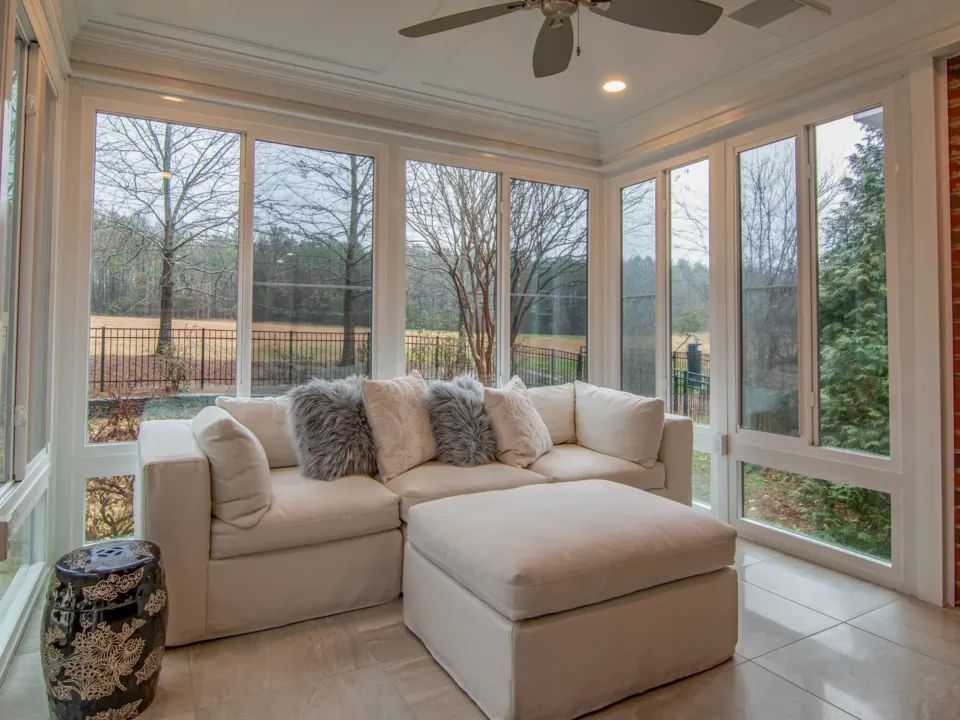
Detail of a canopy made of corrugated sheets

All of Slovakia

Films for polycarbonate, skylights and conservatories

In summer, a conservatory, pergola or glazed canopy turns into a greenhouse. On polycarbonate we use only the “Poly” versions Avery Dennison developed for plastics: SkyLite 20 XTRM PRO Poly or R Silver 20 Poly X. For glass roofs and roof windows we choose solar control films by glass type.

  • Films designed for polycarbonate
  • Less heat under the roof
  • UV protection for plants and furniture

In short

Standard window films cannot go on polycarbonate. This plastic behaves differently from glass. We use only the “Poly” versions with an adhesive for plastics: Avery Dennison SkyLite 20 XTRM PRO Poly for roofs and sloped surfaces, or the mirrored R Silver 20 Poly X. They cut heat and glare under skylights, in conservatories and under terrace canopies. For glass roofs and roof windows we use solar control films for glass. Often we fit the exterior version, on the outside.

Materials we install

What film on polycarbonate does for you

  • Less heat under the roof

    Pergolas, canopies and skylights heat up less in summer.

  • Less glare

    You keep the light, without the harsh sun.

  • UV protection

    The film stops most UV radiation, protecting people and furniture below.

  • Film made for plastic

    On polycarbonate we use films the maker approves for plastic.

Where they are used

On roofs and sloping surfaces we often work from aerial platforms or scaffolding. Access and safety are part of the job. See high-access installation.

  • Conservatories and glazed verandas.
  • Skylights in halls, shopping centres and schools.
  • Polycarbonate canopies over terraces, pergolas, carports and entrances.
  • Glazed atrium roofs and roof windows.

Why not standard window film

Polycarbonate looks like glass but behaves like plastic. Window films are made for glass. On plastic they can blister, peel or crack. That is why Avery Dennison makes a separate range of films with an adhesive for plastics. There are four reasons:

  • The plastic “breathes”. Polycarbonate absorbs moisture and releases it again. Moisture and gases can get trapped under the film as bubbles.
  • Thermal expansion. Polycarbonate expands about seven times more than glass when heated. A dark film that absorbs heat warms it even more, and unevenly.
  • Soft surface. Plastic scratches easily. So you cannot clean it with a razor blade like glass.
  • Protective UV layer. Roofing sheets usually have one side treated against UV. That side must stay facing out.

Polycarbonate types and acrylic

Not every plastic roof is the same. The type of sheet decides whether film makes sense.

  • Solid (monolithic) polycarbonate – smooth and clear like glass. It is the best match for film.
  • Multiwall polycarbonate – we apply film to the smooth outer face. But it will not solve dirt, algae or condensation inside the chambers.
  • Corrugated, trapezoidal or textured plastic – film cannot bond across the whole surface. So we do not apply it.
  • Acrylic (PMMA) – Avery Dennison lists SkyLite 20 XTRM PRO Poly as suitable for PMMA too. With old or unknown sheets, we check suitability in advance.
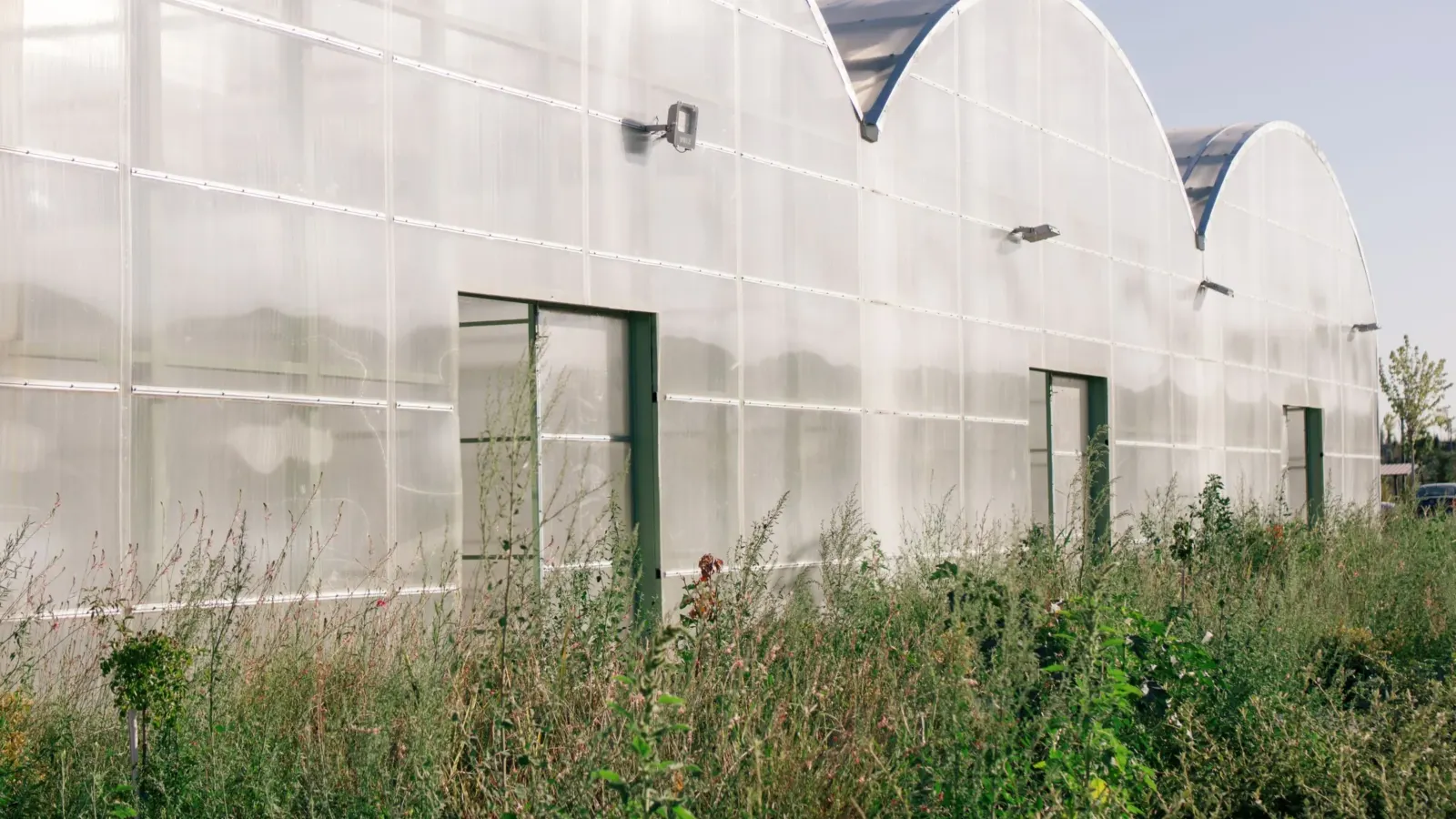
Greenhouse with translucent polycarbonate walls

How the survey works

The survey is free. First we find out whether the roof is glass, polycarbonate or acrylic. It is often impossible to tell by eye. Then we assess:

  • The type of sheet, its age, yellowing and scratches.
  • The roof pitch, water run-off and places where dirt collects.
  • Which side of the sheet has UV protection and where access is possible.
  • The size of the sheets between glazing bars. Film goes on each sheet separately.
  • Access. Nobody walks on a polycarbonate roof, so we work from a ladder, scaffolding or an aerial platform.
  • Whether plants grow under the roof and how much light they need.

Is the roof still under the sheet manufacturer’s warranty? Check its conditions before applying film.

Installation step by step

  • Cleaning – we wash the sheet gently. No harsh solvents and no razor blade that would scratch the plastic.
  • Application – we apply the film wet and in dry weather. Not in rain, and not onto a sheet baking in direct sun.
  • Trimming – we trim the film along the glazing bars with a small gap. This lets water drain freely.
  • Edges – we seal them where the manufacturer requires it for that film.
  • Inspection – we check adhesion on every sheet. We hand over the film and warranty details.

Drying, cleaning and service life

Until the water under the film evaporates, the sheet may look slightly hazy. Small water pockets may also show. With thin films this takes about a month. Don’t wash the film for the first 30 days.

After that, rinse with water and use a soft brush or cloth. Use a mild cleaner with pH 6–8, without ammonia or abrasives. Don’t use a pressure washer; it can lift the film edge.

Avery Dennison gives SkyLite 20 XTRM PRO Poly a 10-year warranted life on sloped and horizontal installations. The mirrored R Silver 20 Poly X lasts less: 3 years sloped, 4 years vertical.

What drives the price

  • Film type. SkyLite for roofs costs more than films for upright surfaces.
  • Area and number of sheets. Many narrow sheets between bars mean more cutting.
  • Access: ladder, scaffolding or aerial platform.
  • Surface condition. Very dirty sheets need more thorough cleaning.
  • Removing old film, if there is any.

Send photos of the roof and dimensions via the quote form or to m2s@m2s.sk. We will get back to you as soon as possible.

Myths about films for plastics

  • “A film is a film.” No. Films for glass and for plastic use different adhesives. Window film on polycarbonate can blister or peel over time.
  • “The darker, the better.” No. A dark film that absorbs heat warms the sheet even more. On plastics we therefore choose films that reflect heat.
  • “Film will rejuvenate an old roof.” No. Only a white film that diffuses light hides yellowing and scratches. It does not restore clarity.
  • “Acrylic and polycarbonate are the same.” No. They are two different plastics. We assess film suitability for each separately.

When film is not the answer

  • The sheet is worn out: brittle, cracked or badly yellowed. A new sheet will give a better result than film.
  • The roof is corrugated, trapezoidal or has a textured surface.
  • The main problem is condensation or dirt inside the chambers.
  • You want full shade. An awning or exterior shade sail will do a better job.

If any of these applies, we will tell you honestly at the survey. We will not push film on you.

Glass roofs and roof windows

The same rules apply to glass as to windows. The sun strikes a roof more directly and for longer. So we choose a stronger solar control film.

Roof glass is often laminated or double-glazed, and large. So we assess thermal stress carefully (the risk of glass cracking from uneven heating). We prefer exterior films.

The complete solution for conservatories is on the conservatory film page.

Films for roofs, skylights and plastics

Films for sloped glazing and plastics have a different adhesive and a tougher surface than ordinary window films. For each one we show how much light and heat it lets through. We also show how long it lasts on a roof.

Avery Dennison · roof glass, exterior

SkyLite 20 XTRM PRO

A film made specifically for glass roofs and skylights. That is where the sun hits most directly and longest. Under the roof, about three quarters of the light and 63–73% of solar energy are cut. So the space stops turning into a greenhouse. It goes on the outside and its surface resists UV and weather.

Light transmission
23% (double glazing 21%)
Solar energy rejected
63% (double glazing 73%)
g-value
0.37 (0.27)
Exterior reflection
26%
UV rejection
99.9%
Durability
10 years sloped and horizontal

Best for: Glass roofs of conservatories, atria, skylights, glazed pergolas.

Warranted durability is 10 years on sloped and horizontal glazing. This applies north of 40° N, which includes Slovakia. Not intended for vertical glass.
Avery Dennison · roof glass, mirror, exterior

SkyLite Silver 20 XTRM PRO

The mirror version for roofs that overheat the most. It stops over 80% of solar energy. From above, the roof mirrors silver. It will be noticeably darker under the glass. It belongs where heat is a bigger problem than light.

Light transmission
15% (double glazing 14%)
Solar energy rejected
83% (double glazing 86%)
g-value
0.17 (0.14)
Exterior reflection
66%
UV rejection
99.9%
Durability
10 years sloped and horizontal

Best for: South-west glass roofs, atria, halls.

Warranted durability is 10 years sloped and horizontal. The film edges are sealed.

Avery Dennison · polycarbonate and acrylic, exterior

SkyLite 20 XTRM PRO Poly

The SkyLite version with an adhesive for polycarbonate and acrylic. Ordinary window film would not hold on plastic, or would blister. This one is made for it. A terrace or pergola roof then lets through about a fifth of the light and far less heat.

Light transmission
21%
Solar energy rejected
73%
UV rejection
99.9%
Durability
10 years sloped and horizontal

Best for: Polycarbonate roofs of terraces, pergolas, carports and conservatories.

Warranted durability is 10 years sloped and horizontal (north of 40° N). We check the specific sheet material in advance.

Avery Dennison · polycarbonate and acrylic, mirror

R Silver 20 Poly X

A strong mirror film with an adhesive for rigid plastics. It stops 81% of solar energy. It will be much darker underneath. It lasts less than SkyLite. It is a sensible choice for upright plastic panels or a shorter time frame.

Light transmission
16%
Solar energy rejected
81%
g-value
0.19
Exterior reflection
64%
UV rejection
99%
Durability
4 years vertical, 3 years sloped

Best for: Plastic infill panels in balustrades and walls, small canopies.

Warranted durability is 4 years vertical and 3 years sloped (central European conditions).

These are Avery Dennison figures (data sheets, distributor ideo.sk). Values are for single glazing, with double glazing in brackets. For the Poly version the distributor gives double-glazing values. Solar energy rejected (TSER) = 1 − g. The g-value is the share of solar heat that gets inside.

Preparing for the installation

Film is applied wet, so the fitter needs to reach the glass from the front and the sides with a squeegee, knife and sprayer.

We need clear access to the windows – at least 1 metre. Please leave roughly 1 m of free space in front of and beside every window. Wardrobes, beds, desks or plants must be moved away before the film is applied, curtains pulled aside and interior blinds raised. The fitters can then work faster and cleaner, with no risk to your furniture.

Caring for film on polycarbonate

Do not clean the film for the first 30 days. On plastic the film dries much as it does on glass.

Do

  • Only lukewarm water with mild soap
  • Soft microfibre cloth
  • Rinse off dust before wiping

Don’t

  • Alcohol, acetone and solvent cleaners (they damage polycarbonate and acrylic)
  • Ordinary window cleaners with alcohol
  • Dry wiping and rough sponges

Tip from practice: Polycarbonate and acrylic are more delicate than glass. If you are unsure about a cleaner, test a small corner first.

Full film care guide

Why choose us to fit your film

We are a certified 3M Endorsed Installer. Our fitters were trained and tested by 3M itself. We have been fitting window and car films for 25 years. How long a film lasts depends on how well it is fitted.

  • We have even worked inside nuclear power plants

    We fitted film at the Jaslovské Bohunice and Mochovce nuclear power plants. With security clearance, work permits and the strictest health and safety rules. We bring the same discipline to your flat or office.

  • Open shopping centres and work from platforms

    Aupark, Eurovea and Polus did not close for us. We worked section by section and before opening. The work area was fenced off. We reached atriums and skylights from platforms. All our installers are certified for work at height and for operating aerial work platforms and walkways.

  • Only premium materials, data shown openly

    We use only premium films from 3M, Avery Dennison, ORAFOL and Solar Screen. They last longer, keep their colour and carry a manufacturer warranty. For every film you get the data sheet and certificates. The values in our quote are the manufacturer’s figures to recognised standards. Not sales promises.

  • We tell you when film isn’t the answer

    Sometimes film will not solve the problem. Or the glass could crack from uneven heat (thermal stress). Then we tell you plainly and suggest what to do instead.

How it works

From your first message to the finished job usually takes a few days. For buildings, we plan the work so it does not disrupt your operations.

  1. Enquiry or photo

    Fill in the online form and see an estimated price at the end. Or send a photo to m2s@m2s.sk. Rough sizes are enough.

  2. Free site visit

    For buildings, we visit, measure the windows and check the glass. Then we recommend a suitable film.

  3. Your quote

    We prepare it as soon as possible. It has a clear price, the exact material, a date and the warranty terms.

  4. Installation and warranty

    Our team of two installers fits the film. You get the data sheet, the manufacturer’s warranty terms and an invoice. For cars, also a certificate of installation.

Frequently asked questions

Didn’t find your answer? E-mail us or send a free quote request – advice costs nothing.

Send us an e-mail
Can a standard solar film be applied to polycarbonate?

No. Polycarbonate absorbs and releases moisture and expands far more than glass. So standard window film can blister or peel on it. We use films with an adhesive for plastics, such as Avery Dennison SkyLite 20 XTRM PRO Poly.

Will film stop overheating under a polycarbonate roof?

Yes. According to the manufacturer, SkyLite 20 XTRM PRO Poly rejects 73 % of solar energy. It lets through 21 % of light. So there is less heat and glare under the roof. It also blocks 99.9 % of UV radiation, which fades furniture and fabrics.

Is the film applied from the inside or the outside?

On polycarbonate roofs, from the outside. SkyLite Poly is an exterior film that stops the heat before it reaches the sheet. For upright plastic panels, we decide by access and film type.

Can film be applied to acrylic sheet?

Yes, if the film manufacturer states it for that material. Avery Dennison declares SkyLite 20 XTRM PRO Poly suitable for both polycarbonate and acrylic (PMMA). With old or unknown sheets, we check first. We do not recommend film for every acrylic sheet.

Can film be applied to multiwall polycarbonate?

Yes, to its smooth outer face. The film reduces heat and light coming through. But it will not solve dirt, algae or condensation inside the chambers. If that is the main problem, replacing the sheets is better.

Is film suitable for a pergola, carport or terrace canopy?

Yes, if the roof is solid or multiwall polycarbonate, or glass. The film reduces heat and glare under the roof. It also protects furniture from fading. We do not use it on corrugated or trapezoidal plastic.

How long does film last on polycarbonate?

Avery Dennison gives SkyLite 20 XTRM PRO Poly a 10-year warranted life on sloped and horizontal installations. The mirrored R Silver 20 Poly X has 4 years on vertical and 3 years on sloped surfaces. Actual life also depends on pitch, dirt and care.

Will film fix yellowed or scratched polycarbonate?

It will not restore clarity. But the white translucent Avery Dennison DS White Poly X hides yellowing and scratches. It diffuses the light and rejects 77 % of solar energy. If the sheet is brittle or cracked, we recommend replacing it.

How do you get onto the roof?

Nobody walks on a polycarbonate roof. We work from ladders, scaffolding or aerial work platforms, arranged as part of the job. See high-access installation.

How should I clean film on a roof?

Don’t wash it for the first 30 days. After that, use water, a soft brush or cloth and a mild cleaner with pH 6–8, without ammonia or abrasives. Don’t use a pressure washer or scrapers.

Can film be applied to roof windows?

Yes. On roof window glass we use solar control films for glass. Depending on the glazing, we assess whether an interior or exterior version suits better.

What do I need to prepare before the film is applied?

Clear access to the windows: leave roughly 1 metre of free space in front of and beside every window. Move wardrobes, beds, desks and plants away beforehand, clear the window sills, pull curtains aside and raise interior blinds. If something heavy cannot be moved, tell us in advance and we will plan around it.

Gloved hands stretching blue film over a car body

Send us a photo of your window or car. We’ll prepare a quote as soon as possible.

A few details and a phone photo are enough. We’ll e-mail you a quote as soon as possible.

  1. 1Service
  2. 2Details
  3. 3Photos
  4. 4Price

What do you need?

The more you tell us, the more accurate the quote. You will see an estimated price at the end.

Job type

Which car is it?

The model and scope let us price precisely – we have film patterns for most cars.

Car

Services

Choose any.

Window tinting

Which windows to tint

Front side windows: clear 3M Safety film only. Windscreen: sun strip only. Choose both in the services above. Pick windows on the 3D model

PPF paint protection film

Coverage

Pick exact panels on the 3D car model.

Film

The estimate below is for gloss PPF. We state the price difference between GSWF, Avery Dennison and HOHO in the quote.

Finish

Film type

Tell us about the windows

Approximate details are enough. We measure precisely during the free site visit.

What do you want to solve?

Choose any.

Film type

Price of the film alone, incl. VAT. Application is added.

Glass sizes

How to measure the glass

Film is applied to the glass only, never to the frame. Measure just the visible glass – from bead to bead.

glass width glass height frame don’t measure bead measure from here
  1. Measure the width and height of the visible glass from one glazing bead to the opposite bead. Do not measure the frame or the sash.
  2. Measure each pane separately. If the window has glazing bars, measure each section and enter how many identical pieces there are.
  3. Centimetre accuracy is enough – round up. We cut the film to size on site anyway.
  4. Not sure? Send a photo of the window with a tape measure, or book a free site visit.

Measure the glass only, bead to bead – not the frame. Enter identical panes once with a quantity.

WidthHeightQtyRemove
cm cm
m²
Film applied

Glass and windows

Glass type
Window frame type

With wooden windows the application costs 20 % more.

Window orientation (choose any)
Access to the windows

Where is the job?

We work out travel from Bratislava from the town.

km

Extras

We need clear access to the windows – at least 1 metre. Please leave roughly 1 m of free space in front of and beside every window. Wardrobes, beds, desks or plants must be moved away before the film is applied, curtains pulled aside and interior blinds raised. The fitters can then work faster and cleaner, with no risk to your furniture.

Photos and notes

A phone photo is often enough for an accurate quote without a visit. Photograph the whole window and its surroundings; for cars the full side and front.

Photos

Site visit

Estimated price

–

    This is an estimate based on your details. We confirm the exact price after a visit or from photos – we will get back to you as soon as possible.

    Where should we send the quote?

    Contact

    How should we contact you?

    Company

    Optional. Fill in if the quote is for a company.

    Search