We need essential cookies for the website to work. With your consent, we also use analytics and marketing cookies to improve the website and measure campaigns. You can change your choice at any time in the footer. About cookies
EssentialForm protection and storing your choice. The website does not work without them.Always on
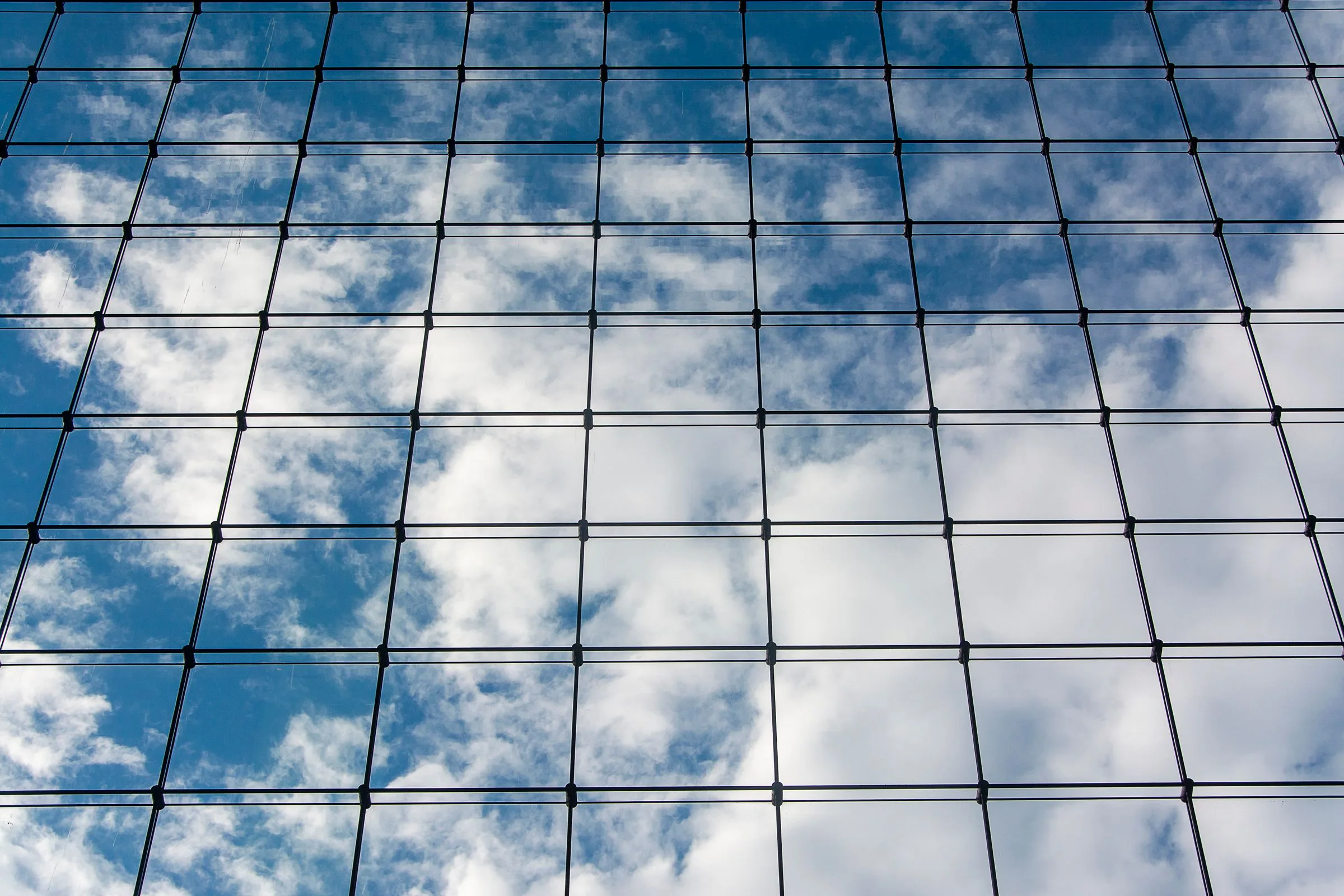
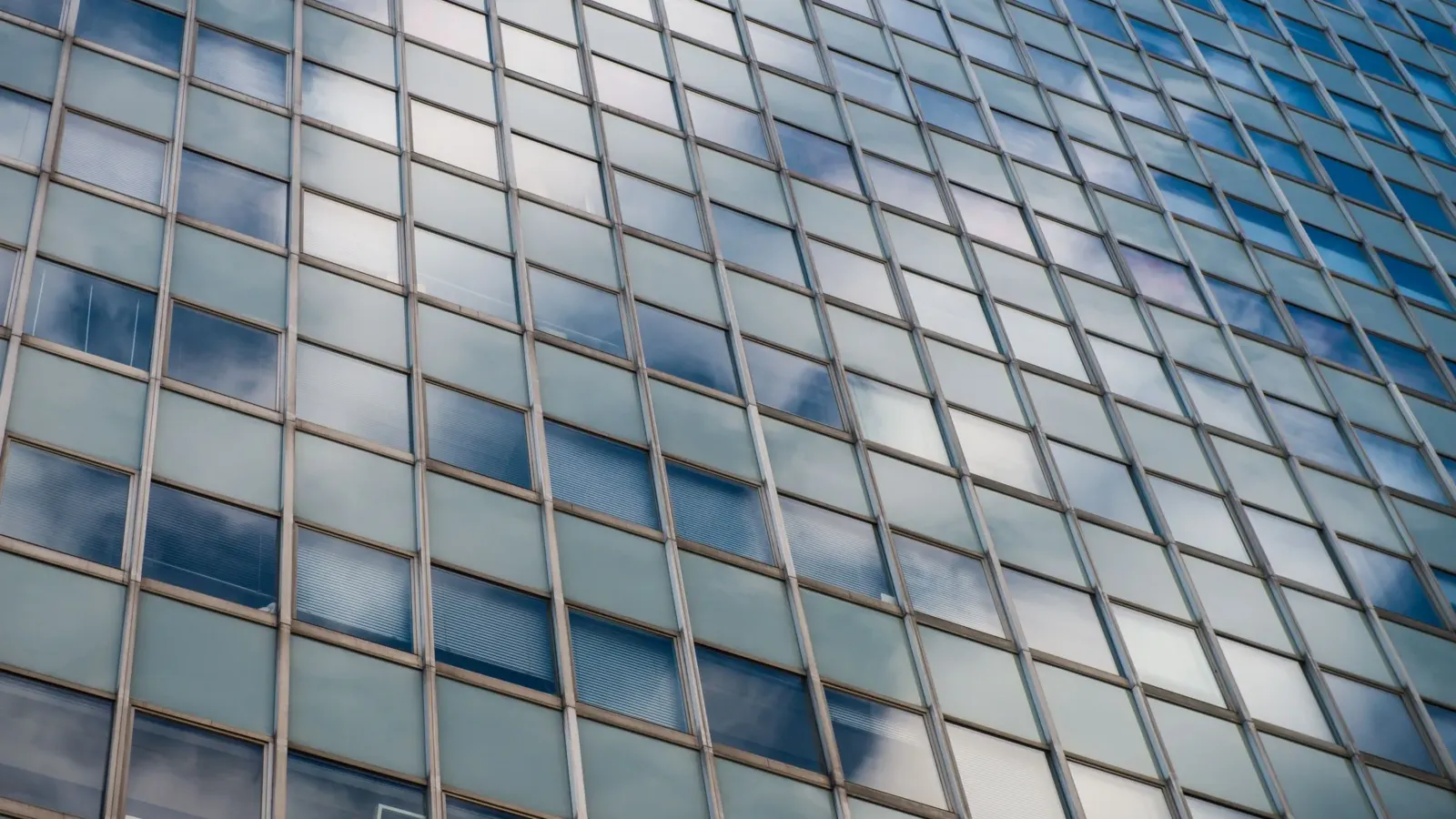
Mirror film gives you privacy during the day. People outside see a reflection, while you keep your view. It is also one of the best films against summer heat. We explain up front when the one-way effect works and when it does not.
Privacy during the day
TSER up to 81 % on single and 85 % on double glazing
Reflective (mirror) films have a thin metal layer that reflects both light and heat. For example, 3M Silver 15 stops 81 % of solar energy on single glazing and 85 % on double glazing. Privacy only works when it is brighter outside than inside. By day, people outside see a reflection. In the evening, with the lights on, the effect reverses. For evening privacy, choose a frosted film or add blinds.
Privacy comes from a difference in light, not from the film itself. No film is truly one-way. It reflects light equally on both sides.
By day it is much brighter outside than in the room. So passers-by mainly see a reflection of the sky and street. Meanwhile, you see out comfortably.
The effect is stronger with a darker, shinier film and a bigger difference in light. On cloudy days, in shade or in a brightly lit office, it is weaker. At the site visit we apply a sample, so you can check the effect on your own window.
ground-floor flats and offices facing the street
meeting rooms, receptions and gatehouses
south- and west-facing façades that overheat
windows where you want a uniform façade look
What happens in the evening
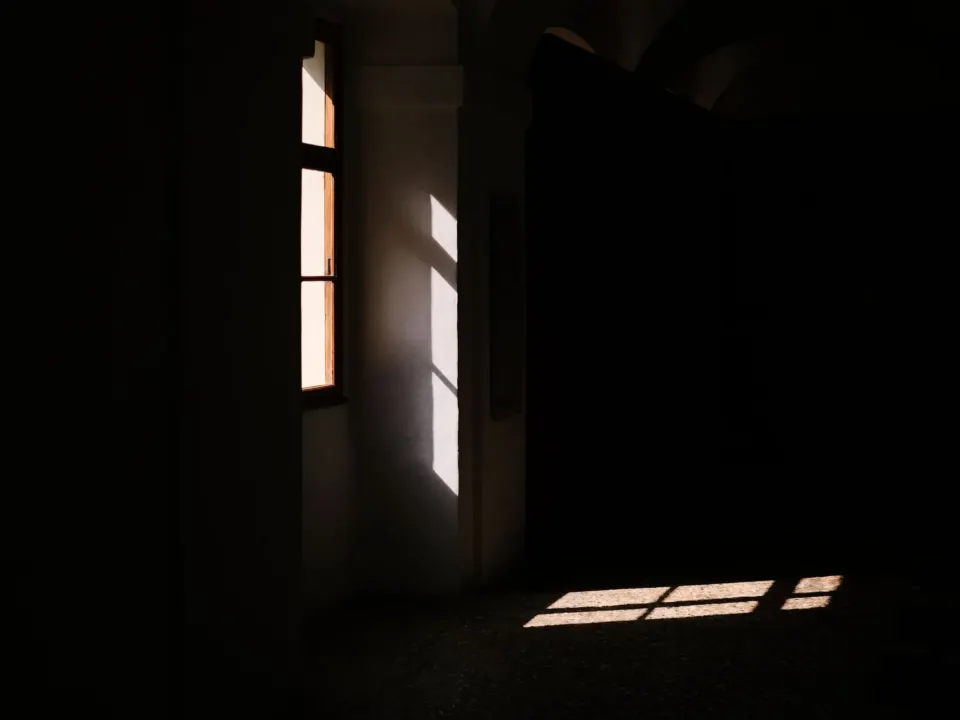
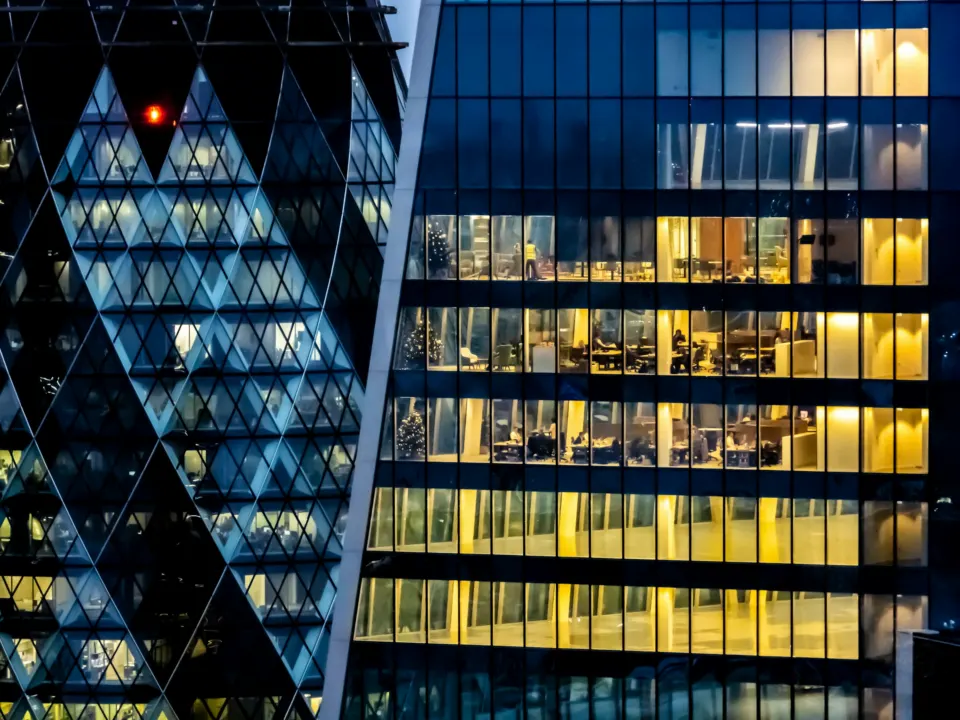
In the evening, people can see in. When it gets dark and the lights go on, it is brighter inside than out. The effect reverses, and you see your own reflection in the window.
This is not a fault of the film; it is physics. It applies to every mirror film.
For evening privacy you have three options. The first is a frosted or decorative film. It gives privacy all the time, but no view. The second is mirror film plus blinds.
The third is a film with less reflection on the inside, such as Avery Dennison DR Grey or 3M Neutral. Your own reflection is then less distracting in the evening.
Which reflective film to choose
3M Silver 15 Exterior is a strong mirror. It lets through 17 % of light, stops 81 % of solar energy and cuts glare by 81 %. It gives the most daytime privacy, but the room gets much darker.
3M Silver 35 Exterior is lighter. It lets through 37 % of light, stops 64 % of energy and cuts glare by 58 %. It balances privacy, heat and daylight.
From Avery Dennison we offer silver R Silver 20, 35 and 50. There is also grey DR Grey, with less reflection inside, and bronze DS Bronze. Want heat protection without a mirror? See the non-metallic 3M Prestige solar control films.
Glass type and thermal stress
On double glazing, we prefer to fit mirror films outside. They reflect a lot of energy and absorb a lot too.
A dark film on the inside of double glazing sends heat back into the glass. This heats the gap between the panes. On large panes, in part shade, on triple glazing or tinted glass, this raises the risk of thermal stress. That is strain from uneven heating, which can crack the glass.
So the high-performance 3M Silver films are exterior films, fitted to the outside of the glass. At the site visit we check the glass type, pane size and shading. We then choose a film the maker recommends for your glass.
Signal, façade and apartment buildings
The metal layer can weaken mobile signal and Wi-Fi. This matters most in buildings with poor coverage. If signal is important to you, we consider a non-metallic film or mirror film on only some windows. Don’t want a mirror look? See spectrally selective films.
Mirror film visibly changes how a façade looks. In a block of flats, the building manager or owners’ association may want a uniform look. Check this in advance. On business premises, film often helps to unify the façade.
Mirror and reflective films we install
Mirror film works like one-way glass only while it is brighter outside. In the evening, with the lights on, the effect reverses. For each film we show how much light it lets through and how strongly it mirrors. We also say what that means for your privacy.
3M · mirror, exterior
Silver 15 X
A strong mirror. By day the window looks silver from outside, and nobody can see in. From inside, the view is like through dark sunglasses. It stops over 80% of solar energy. In the evening, with the lights on, the effect reverses and people can see in. Then you need curtains or blinds.
Light transmission
17% (double glazing 16%)
Solar energy rejected
81% (double glazing 85%)
g-value
0.19 (0.15)
Glare reduction
81%
Best for: south- and west-facing glass façades, offices and warehouses where heat is the main problem.
3M data sheet (6 mm glass). Warranty depends on the glass; stated in our quote.
3M · mirror, exterior
Silver 35 X
A medium mirror that keeps more light in the room. By day it gives privacy while it is brighter outside. It stops about two thirds of solar energy. After dark, with the lights on, people can see in.
Light transmission
37% (double glazing 34%)
Solar energy rejected
64% (double glazing 71%)
g-value
0.36 (0.29)
Glare reduction
58%
Best for: ground-floor flats and offices facing the street, sunny façades.
3M data sheet (6 mm glass). Warranty depends on the glass; stated in our quote.
Avery Dennison · mirror, exterior
R Silver 20 X
An exterior mirror that reflects over 60% of light. Neighbours cannot see in during the day. It stops heat as well as 3M Silver 15 X. After dark, with the lights on, the mirror turns inwards.
Light transmission
17% (double glazing 16%)
Solar energy rejected
81% (double glazing 85%)
g-value
0.19 (0.15)
Exterior reflection
62%
UV rejection
99%
Best for: façades, conservatories with vertical glazing, windows facing neighbours.
Warranted durability 7 years vertical, 4 years sloped (central European conditions).
Avery Dennison · mirror, exterior
R Silver 35 X
A balance of light and privacy. A third of the light gets in, and the window clearly mirrors from outside. It stops two thirds to almost three quarters of solar energy.
Light transmission
33% (double glazing 31%)
Solar energy rejected
66% (double glazing 72%)
g-value
0.34 (0.28)
Exterior reflection
42%
UV rejection
99%
Best for: offices and flats wanting daytime privacy with enough light.
Warranted durability 7 years vertical, 4 years sloped (central European conditions).
Avery Dennison · mirror, exterior
R Silver 50 X
A lighter mirror film. Half of the light stays, and the window mirrors only slightly. Privacy is weaker. In shade or under cloud, people may see in. A good choice when heat matters most and you do not want a dark room.
Light transmission
48% (double glazing 44%)
Solar energy rejected
54% (double glazing 62%)
g-value
0.46 (0.38)
Exterior reflection
27%
UV rejection
99%
Best for: offices and shops that need daylight.
Warranted durability 4 years vertical, 3 years sloped (central European conditions).
Avery Dennison · mirror, interior
R Silver 20 i
The same mirror as the exterior 20 X, but fitted from inside. It lasts longer and needs no scaffolding. On double glazing the effect is lower (70%), because heat stays in the glass. So on double glazing we always check thermal stress.
Light transmission
18% (double glazing 17%)
Solar energy rejected
78% (double glazing 70%)
g-value
0.22 (0.30)
Exterior reflection
61%
UV rejection
99%
Best for: single glazing, windows with no outside access.
Warranted durability 12 years (central European conditions).
Avery Dennison · dual-reflective, exterior
DR Grey 20 X
A dual film: a mirror outside, dark grey and low-gloss inside (14% reflection). In the evening you do not see yourself in the window. The view out is better than with a pure silver film. But it does not give privacy after dark either.
Light transmission
19% (double glazing 18%)
Solar energy rejected
69% (double glazing 77%)
g-value
0.31 (0.23)
Reflection out / in
34% / 14%
Glare reduction
79%
Best for: flats and offices used in the evening.
Warranted durability 5 years vertical, 3 years sloped.
Avery Dennison · dual-reflective, exterior
DR Grey 35 X
A lighter dual film. It cuts heat without a strong mirror. It is slightly glossy outside. Inside it is neutral grey, with a calm view even in the evening.
Light transmission
36% (double glazing 32%)
Solar energy rejected
57% (double glazing 65%)
g-value
0.43 (0.35)
Reflection out / in
22% / 14%
Glare reduction
61%
Best for: living rooms, studies, offices with a view.
Warranted durability 5 years vertical, 3 years sloped.
Avery Dennison · dual-reflective, interior
DR Grey 05 i
A very dark dual film for the inside. Only 7% of light gets through. By day you get near-total privacy and almost no glare. There is no distracting mirror inside. For living rooms it is usually too dark.
Light transmission
7% (double glazing 7%)
Solar energy rejected
82% (double glazing 71%)
g-value
0.18 (0.29)
Reflection out / in
59% / 18%
Glare reduction
92%
Best for: stairwells, stores, server rooms, spaces with screens in the sun.
Warranted durability 12 years.
Solar Screen · mirror, exterior
Silver 345 XC
A light silver exterior film. It lets in half of the light and is slightly glossy outside. By day it makes it harder to see in, but privacy is not complete. It stops 55–65% of solar energy.
Thickness
75 µm
Light transmission
55% (3 mm glass), 50% (Low-E double glazing)
Solar energy rejected
55% (double glazing 65%)
g-value
0.45 (0.35)
Reflection out / in
22% / 20%
UV rejection
99%
Best for: façades and shop windows that need less heat but enough light.
Solar Screen data sheet. Warranty 12 years (vertical installation).
Solar Screen · mirror, exterior
Vista 99 XC
An almost opaque mirror. It lets through just 1% of light. The maker describes it as day-and-night privacy. You cannot see through such a dark layer even with the lights on. Without lamps, though, the room will be dark and the view out minimal.
Thickness
75 µm
Light transmission
1%
Solar energy rejected
95% (double glazing 98%)
g-value
0.05 (0.02)
Reflection out / in
88% / 11%
UV rejection
99%
Best for: plant rooms, stores, changing rooms – windows where no view is needed.
Warranty 3 years (exterior).
Manufacturer data from 3M, Avery Dennison and Solar Screen (data sheets, distributor ideo.sk). 3M values are on 6 mm glass, Avery Dennison on single glazing, Solar Screen on 3 mm glass. Double-glazing values are in brackets. Reflection out / in = how much visible light is reflected.
Reflective films in figures
Reflective films stop the most heat of all solar films. But they also stop the most light. For comparison we also show a neutral film and non-metallic 3M Prestige. The data is from 3M for 6 mm clear glass and clear double glazing.
Single glazing: light, heat and glare6 mm clear glass, 3M exterior films.
VLT – light transmitted
TSER – energy rejected
Glare reduction
Silver 15 Exteriorstrongly mirrored, g = 0.19
17 % – VLT – light transmitted
81 % – TSER – energy rejected
81 % – Glare reduction
Silver 35 Exteriorreflective, g = 0.36
37 % – VLT – light transmitted
64 % – TSER – energy rejected
58 % – Glare reduction
Neutral 35 Exteriordarker, medium reflectance, g = 0.49
44 % – VLT – light transmitted
51 % – TSER – energy rejected
50 % – Glare reduction
Prestige 70 Exteriornon-metallic, no mirror, g = 0.48
71 % – VLT – light transmitted
52 % – TSER – energy rejected
20 % – Glare reduction
Silver 15 stops the most heat, but lets through only 17 % of light. Prestige 70 stops about as much energy as Neutral 35. It lets through much more light. But it gives no privacy.
Show as a table
Metric
VLT – light transmitted
TSER – energy rejected
Glare reduction
Silver 15 Exterior
17 %
81 %
81 %
Silver 35 Exterior
37 %
64 %
58 %
Neutral 35 Exterior
44 %
51 %
50 %
Prestige 70 Exterior
71 %
52 %
20 %
Double glazing: light and heatClear double glazing, film on the outside.
VLT – light transmitted
TSER – energy rejected
Silver 15 Exteriorg = 0.15
16 % – VLT – light transmitted
85 % – TSER – energy rejected
Silver 35 Exteriorg = 0.29
34 % – VLT – light transmitted
71 % – TSER – energy rejected
Neutral 35 Exteriorg = 0.38
37 % – VLT – light transmitted
62 % – TSER – energy rejected
Prestige 70 Exteriorg = 0.39
63 % – VLT – light transmitted
61 % – TSER – energy rejected
On double glazing, exterior mirror films stop even more energy. They reflect it before it enters the sealed unit.
Show as a table
Metric
VLT – light transmitted
TSER – energy rejected
Silver 15 Exterior
16 %
85 %
Silver 35 Exterior
34 %
71 %
Neutral 35 Exterior
37 %
62 %
Prestige 70 Exterior
63 %
61 %
What the values mean
One-way effect
Privacy created when one side of the glass has much more light. It applies to all mirror films. It reverses in the evening.
Reflectance
How much light the glass reflects. Reflective films reflect a lot, so they look like mirrors. Non-metallic Prestige reflects only 5–9 %.
VLT
How much visible light the film lets through, in %. Lower VLT means a darker room, but more daytime privacy.
TSER
How much solar energy the film stops, in %. TSER = 1 − g. The main measure of heat protection.
g-value
How much solar energy gets into the room. Silver 15 on double glazing has g = 0.15.
Source: 3M Silver, Neutral and Prestige Exterior data sheets (EN 410 / NFRC), 6 mm clear glass and clear double glazing. Values are indicative. We give exact data for your glass in the quote.
Mirror, neutral, non-metallic or frosted?
Film
Daytime privacy
Evening privacy
Heat protection
Look from outside
3M Silver 15
strong
no
highest (TSER 81–85 %)
pronounced mirror
3M Silver 35 / Avery R Silver
medium
no
high (Silver 35: TSER 64–71 %)
mirror, brighter room
3M Neutral / Avery DR Grey
slight
no
medium to high
darker glass with less reflection
3M Prestige
no
no
medium to high, no darkening
almost clear glass
Frosted film
yes
yes
not designed for heat reduction
frosted, sandblasted glass
At the site visit we put samples on your window. You can judge privacy and looks in daylight with your own eyes.
Preparing for the installation
Film is applied wet, so the fitter needs to reach the glass from the front and the sides with a squeegee, knife and sprayer.
We need clear access to the windows – at least 1 metre. Please leave roughly 1 m of free space in front of and beside every window. Wardrobes, beds, desks or plants must be moved away before the film is applied, curtains pulled aside and interior blinds raised. The fitters can then work faster and cleaner, with no risk to your furniture.
Caring for mirror film
Do not clean the film for the first 30 days. Mirror (metallised) film dries more slowly than clear film. The haze can stay for several weeks.
Do
Plenty of water with a mild, ammonia-free cleaner
Soft microfibre cloth
Clean in the shade or at dusk to avoid streaks
Pull the squeegee in one direction
Don’t
Razor blades, scrapers and rough sponges
Dry dusting (it leaves fine scratches)
Cleaners with ammonia
Stickers and suction cups on the film
Tip from practice: Scratches show more on mirror film than on clear film. Always wet the film before you wipe it.
We are a certified 3M Endorsed Installer. Our fitters were trained and tested by 3M itself. We have been fitting window and car films for 25 years. How long a film lasts depends on how well it is fitted.
We have even worked inside nuclear power plants
We fitted film at the Jaslovské Bohunice and Mochovce nuclear power plants. With security clearance, work permits and the strictest health and safety rules. We bring the same discipline to your flat or office.
Open shopping centres and work from platforms
Aupark, Eurovea and Polus did not close for us. We worked section by section and before opening. The work area was fenced off. We reached atriums and skylights from platforms. All our installers are certified for work at height and for operating aerial work platforms and walkways.
Only premium materials, data shown openly
We use only premium films from 3M, Avery Dennison, ORAFOL and Solar Screen. They last longer, keep their colour and carry a manufacturer warranty. For every film you get the data sheet and certificates. The values in our quote are the manufacturer’s figures to recognised standards. Not sales promises.
We tell you when film isn’t the answer
Sometimes film will not solve the problem. Or the glass could crack from uneven heat (thermal stress). Then we tell you plainly and suggest what to do instead.
How it works
From your first message to the finished job usually takes a few days. For buildings, we plan the work so it does not disrupt your operations.
Enquiry or photo
Fill in the online form and see an estimated price at the end. Or send a photo to m2s@m2s.sk. Rough sizes are enough.
Free site visit
For buildings, we visit, measure the windows and check the glass. Then we recommend a suitable film.
Your quote
We prepare it as soon as possible. It has a clear price, the exact material, a date and the warranty terms.
Installation and warranty
Our team of two installers fits the film. You get the data sheet, the manufacturer’s warranty terms and an invoice. For cars, also a certificate of installation.
Frequently asked questions
Didn’t find your answer? E-mail us or send a free quote request – advice costs nothing.
Yes, if your lights are on inside. The effect reverses because it is brighter inside than out. For evening privacy we recommend frosted film or blinds.
Is one-way film really one-way?
No, it reflects light equally on both sides. Privacy comes only from the difference in light; by day it is much brighter outside. On cloudy days or with strong lighting inside, the effect is weaker.
Which film gives the most daytime privacy?
3M Silver 15 is the strongest. It lets through only 17 % of light and is strongly mirrored. The lighter Silver 35 balances privacy and daylight.
Will mirror film reduce heat in the room?
Yes, a lot. 3M Silver 15 stops 81 % of solar energy on single glazing and 85 % on double glazing. Silver 35 stops 64 % and 71 %.
Will the room be too dark?
With Silver 15 the room will be noticeably darker. We recommend it mainly for large south- and west-facing windows. If you want more light, we choose the lighter Silver 35.
Is mirror film applied inside or outside?
The high-performance 3M Silver films go on the outside. On double glazing this is safer because of thermal stress. We use interior reflective films where the glass type allows.
Why do I see myself in the window at night?
When it is brighter inside, the film reflects the light from the room. Darker films reflect less on the inside, such as Avery Dennison DR Grey or 3M Neutral.
Does metallic film interfere with mobile signal?
It may weaken the signal slightly. If this matters to you, we will recommend the non-metallic 3M Prestige series. Or mirror film on only some windows.
Is mirror film suitable for a flat in a panel block?
Technically, yes. But the building manager or owners’ association may want a uniform façade. Check this in advance.
What shades are available?
Silver (3M Silver, Avery R Silver), grey and neutral (Avery DR Grey, 3M Neutral) and bronze (Avery DS Bronze). We bring samples to the site visit.
How much does mirror film cost?
The price depends on the film type, area, glass type and whether it goes on the outside. Send sizes and photos via the quote form or to m2s@m2s.sk. We will reply as soon as possible.
What do I need to prepare before the film is applied?
Clear access to the windows: leave roughly 1 metre of free space in front of and beside every window. Move wardrobes, beds, desks and plants away beforehand, clear the window sills, pull curtains aside and raise interior blinds. If something heavy cannot be moved, tell us in advance and we will plan around it.