We need essential cookies for the website to work. With your consent, we also use analytics and marketing cookies to improve the website and measure campaigns. You can change your choice at any time in the footer. About cookies
EssentialForm protection and storing your choice. The website does not work without them.Always on
Safety film turns ordinary glass into a barrier that does not shatter on impact. It delays intruders, protects people from shards and deters vandals. Yet it is barely visible on the window. We choose the protection class by EN 12600 and EN 356 and by your insurer’s needs.
Clear, transmits 85–87 % of light
EN 12600 1B1 and EN 356 P1A–P2A classes
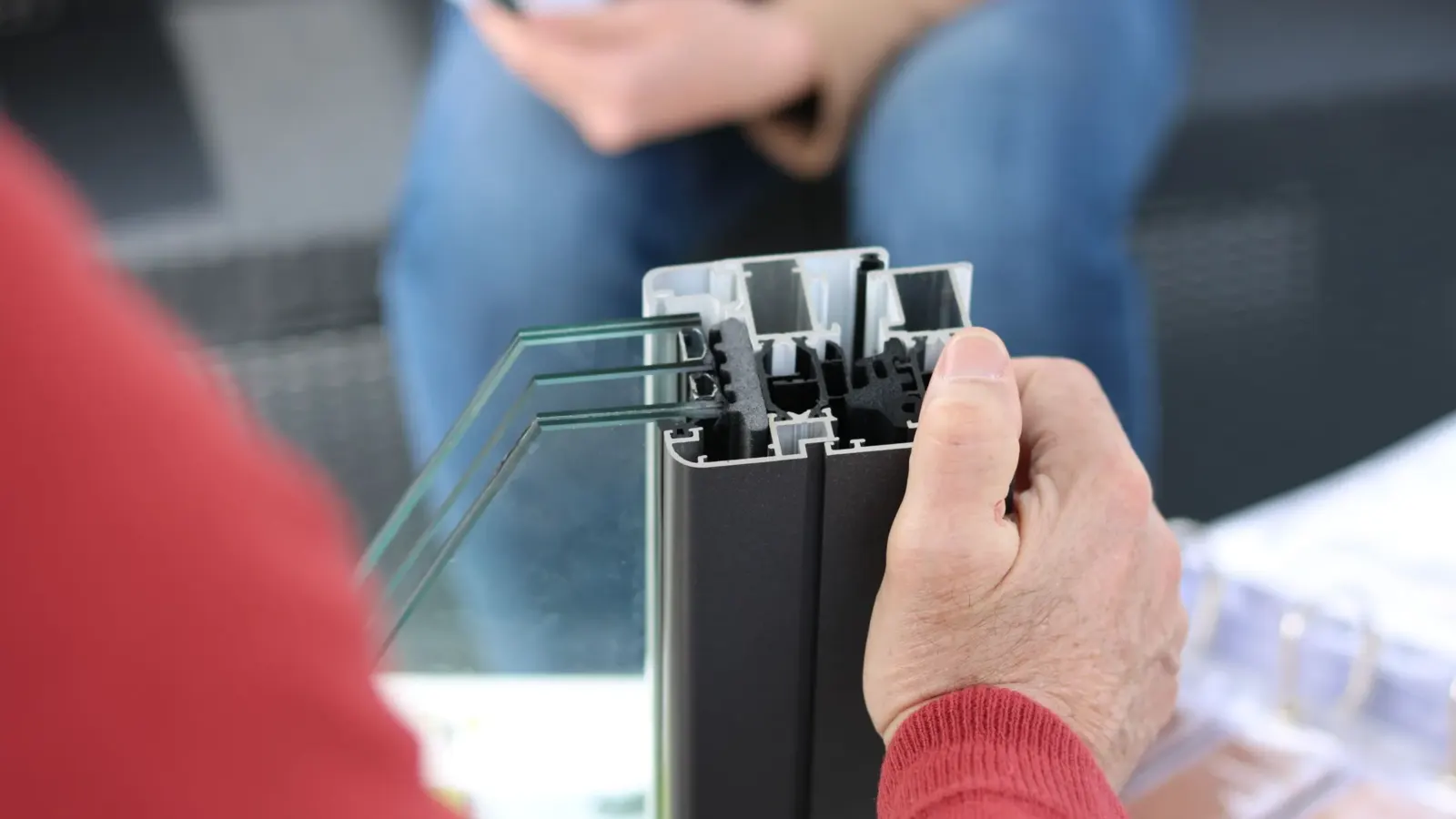
Film under the glazing bead – glass stays in the frame
Safety films hold the shards together when glass breaks and slow down entry. They are thick, multi-layer polyester films. They range from 100 to about 350 µm (0.1 to 0.35 mm), special types even more. Clear 3M Scotchshield films reach the EN 12600 people-protection classes 2B2 to 1B1. Thicker types also resist manual attack to EN 356, classes P1A to P2A. On PVC and aluminium windows we fit them right under the glazing bead. Broken glass then stays in the frame.
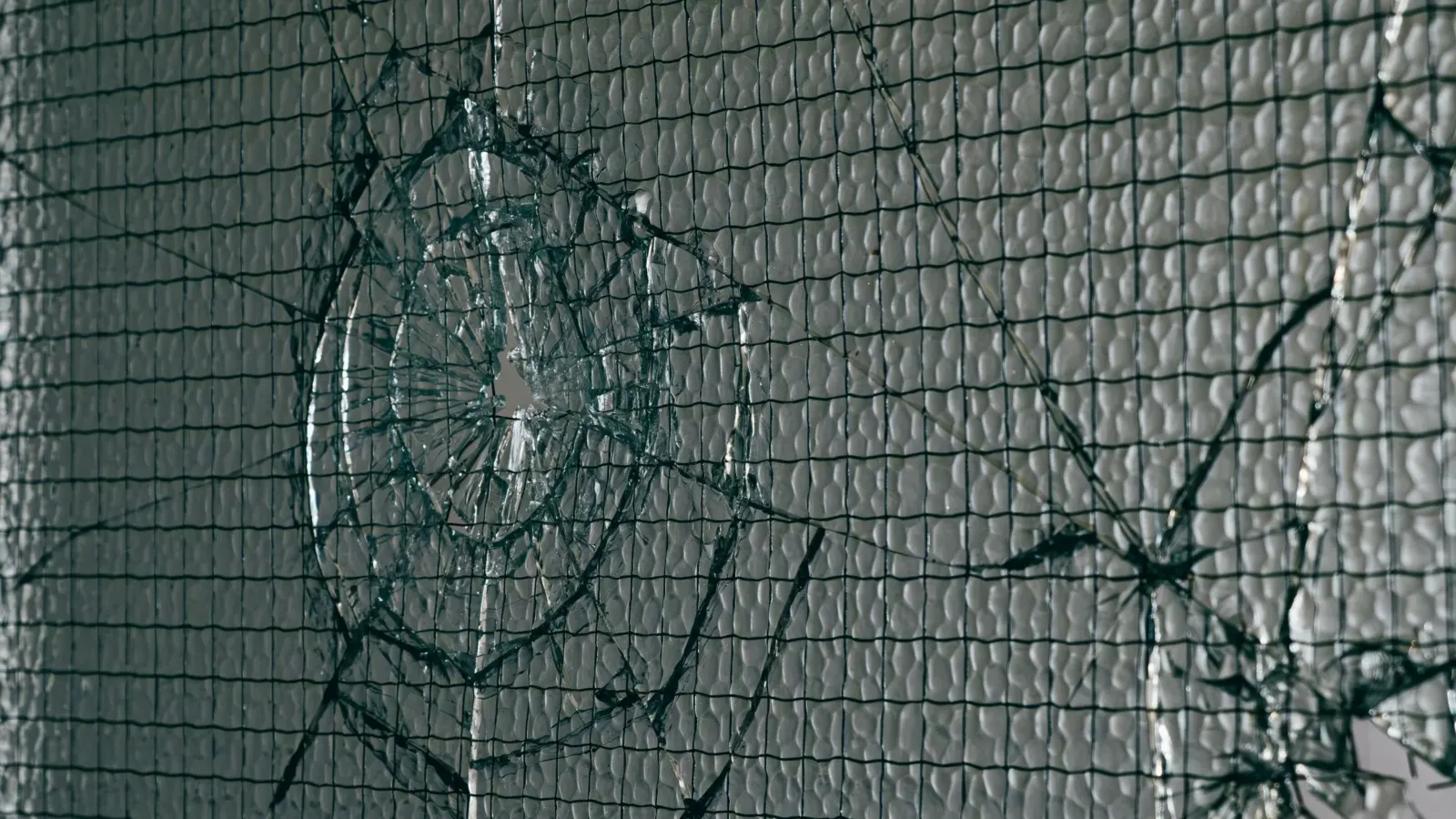
If the glass breaks, the film holds the shards together and protects people from cuts (tested to EN 12600).
Slows down burglars
Selected thick films have an EN 356 resistance class. Getting through the glass takes longer and makes noise.
Almost invisible
Clear safety films let through 85 % of light or more. Your windows look the same.
UV and sun as well
They stop 99 % of UV. Combined films also reduce heat.
What safety film does to glass
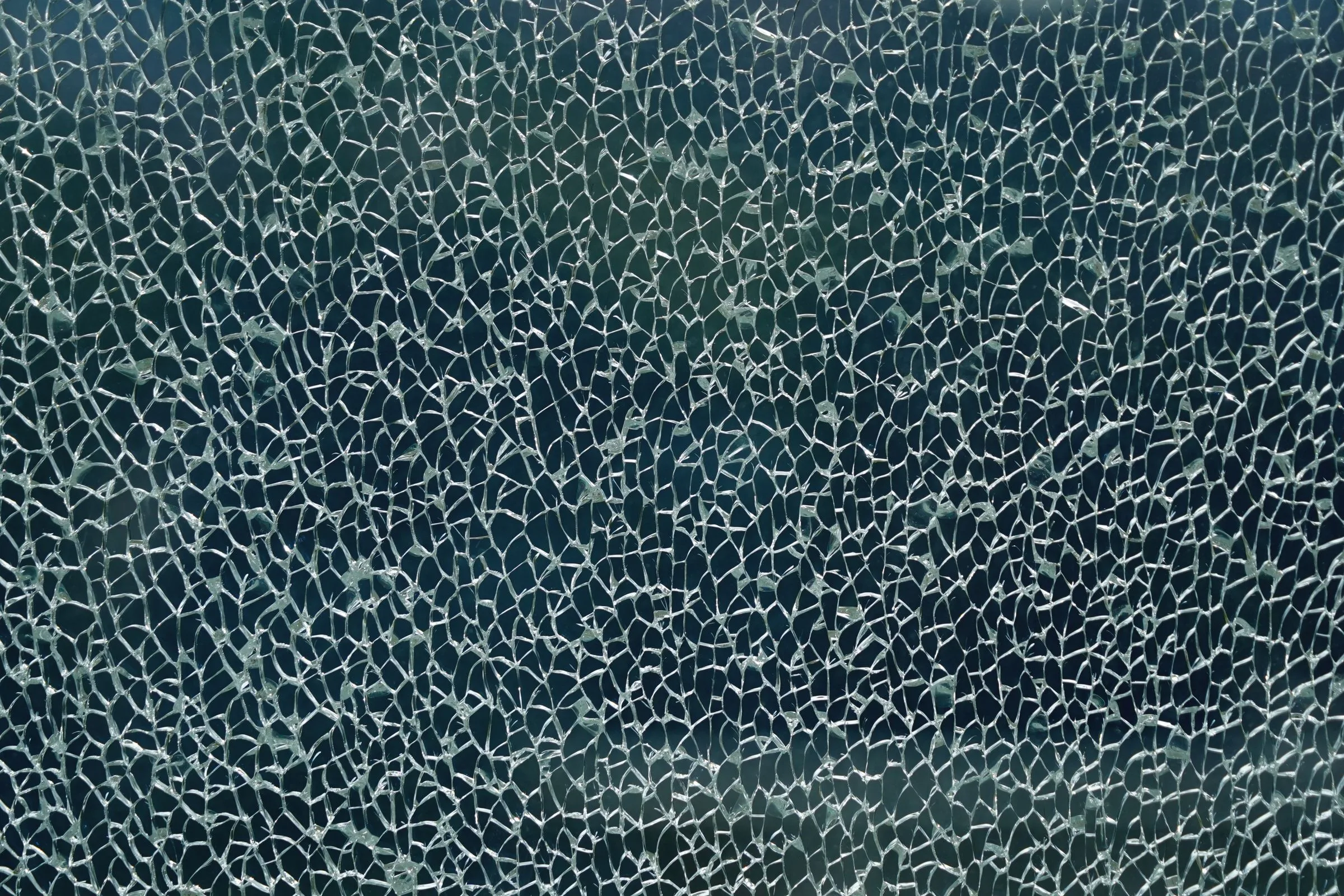
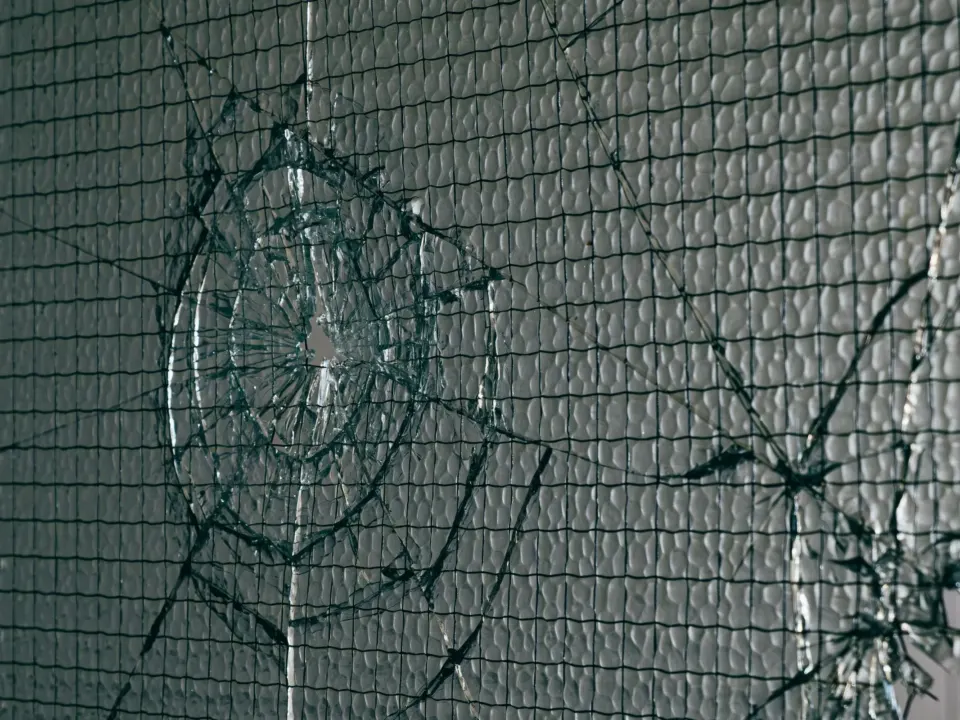
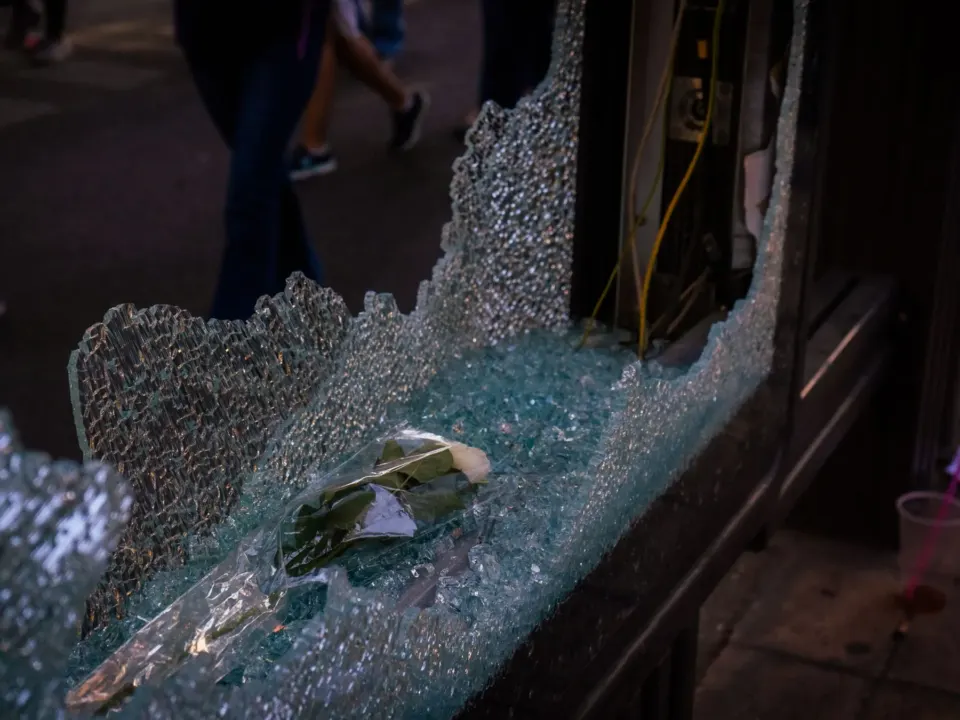
With film, broken glass stays in the frame as a flexible barrier. Ordinary float glass breaks into sharp pieces on impact. The opening is then clear within seconds.
With film, an intruder needs more time. They make more noise and risk injury. That is exactly what deters them.
protection against break-ins at homes, shops and offices (smash-and-grab)
protection of people from shards in schools, nurseries, hospitals and public spaces
less damage from vandalism, hail and spontaneous glass breakage
glass stays clear, with 99 % UV rejection
Two standards: EN 12600 and EN 356
EN 12600 tells you whether the glass will protect a person on impact. A 50 kg pendulum with two tyres strikes the glass. It swings from 190 mm (class 3), 450 mm (class 2) or 1,200 mm (class 1).
The letter shows how the glass breaks. B means it cracks, but the pieces stay together. So 1B1 is the top class. The glass will not let a person through, even in a hard impact.
EN 356 tells you how long the glass will resist an attack. A 4.11 kg steel ball is dropped onto the glass three times. The impact points form a triangle around the centre of the pane. For class P1A it falls from 1.5 m, for P2A from 3 m. The ball must not pass through.
Only the thickest films reach class P3A (ball from 6 m). Classes P4A and P5A need laminated security glass, not film.
Important: a class only applies to the film on the glass the maker tested. Glass type and thickness matter. So our quotes always state which glass the class applies to.
We choose the film by risk
In flats, houses and offices the main goal is protecting people. 3M Safety S40 (100 µm) or S70 (175 µm) is often enough, both EN 12600 class 2B2. S80 (200 µm) reaches class 1B1. Where we cannot fit from inside, we use the exterior versions S40X and S70X.
For ground floors, shop windows and higher-risk sites we recommend 3M Scotchshield Ultra S800 (200 µm). It has many thin layers, so it is very hard to tear. On 4 or 6 mm glass it reaches EN 12600 1B1 and EN 356 P1A. On 5 mm toughened glass it reaches EN 356 P2A.
The three-ply S140 (about 325–350 µm) reaches EN 356 P2A. For the highest needs there is 3M Scotchshield S2400 at 635 µm. According to its data sheet, Solar Screen Safety Clear 17 C (485 µm) also reaches EN 356 P3A.
From Avery Dennison we offer clear SF Clear films in 4, 7, 8, 12 and 15 mil. That is about 101 to 381 µm.
We use only premium materials from 3M, Avery Dennison, ORAFOL and Solar Screen. They last longer, keep their colour and carry a manufacturer warranty.
Film under the bead: glass stays put
Film alone holds the shards together. But a heavy blow can push the whole broken pane out of the frame.
So on aluminium and PVC windows we fit it differently. We remove the glazing bead (the strip that holds the glass in the frame). We lay the film right to the glass edge, so it continues under the bead. Then we put the bead back.
When the glass breaks, the film-held glass stays clamped in the frame. It does not fall out, so an intruder cannot get in easily.
It is a higher level of security than a standard installation. On wooden windows the glass is sealed with silicone, so there we fit the film up to the silicone. Read more on the safety film under the glazing bead page.
Safety and cooling in one film
If overheating is also a problem, you do not need two layers. 3M Scotchshield Ultra Prestige S70 (203 µm) combines safety with sun protection. It has EN 12600 class 1B1 and EN 356 P1A (on 5 mm toughened glass).
On single glazing it lets through 69 % of light and stops 49 % of solar energy. Find out more about solar control films.
Where we apply safety films
Over 25 years we have worked on sites with the strictest access rules too. Where premises cannot close, we work in phases, in the evening or at weekends.
family homes and ground-floor flats – patio doors and windows, the most common break-in points
schools and nurseries – glazed doors, corridors and sports halls where children could be injured
shops and shop windows – protection of goods against quick break-ins, often combined with anti-graffiti film
Insurers and public tenders more and more often ask for a specific class to EN 356 or EN 12600. Send us the exact requirement. We will propose a film that meets it. With the job we provide:
the exact designation and data sheet of the film used
the manufacturer’s test documents to EN 12600 and EN 356 for the relevant glass combination
a certificate of application with scope, date and location
where film goes under the glazing bead, a description of the method
Fitting and drying of thick films
Thick films take longer to dry than thin solar films. Depending on thickness, temperature and sun, it can take about 140 days.
Until then the glass may look slightly hazy or show small water pockets. This is normal.
Do not wash the film for the first 30 days. After that, clean it with a soft cloth and a cleaner with pH 6–8. Avoid ammonia and abrasives.
Safety films we install
For each film we give the class, the thickness and a plain explanation. No film makes glass unbreakable or bulletproof. Bullet resistance is a matter for EN 1063 and thick laminated glass. We do not supply bullet-resistant glass. We explain the difference on the bullet-resistant glass page. Film holds the shards and delays an attacker. Fitted under the glazing bead, it keeps the whole pane in the frame.
Avery Dennison · safety, interior
SF Clear 4 mil i
A thin clear film that is almost invisible on the glass. When a ball, an impact or hail breaks the glass, the shards stay on the film. They do not fly into the room. It will not stop a burglar; it protects people, not property.
Thickness
100 µm (4 mil)
Light transmission
89%
UV rejection
97%
EN 12600
2B2
Break strength
approx. 20 kg/cm
Best for: glass doors and panels at home, children’s rooms, nurseries, mirrors and glass furniture.
EN 12600 2B2 (50 kg pendulum from 450 mm – the glass cracks but holds together). Reaction to fire B-s1, d0 (SF Clear range). Warranted durability 12 years.
Avery Dennison · safety, interior
SF Clear 7 mil i
A medium thickness for homes and offices. It also copes with a harder body impact. For example, a child running into a glass door or someone falling against it. In a break-in it adds a few seconds, but it is not an anti-burglary film.
Thickness
177 µm (7 mil)
Light transmission
88%
UV rejection
99%
EN 12600
2B2 / 1B1 (depending on glass)
Break strength
over 32 kg/cm
Best for: glazed doors, partitions and windows in corridors, stairwells and schools.
EN 12600 2B2, 1B1 on some glass build-ups (distributor data). Warranted durability 12 years.
Avery Dennison · safety, interior
SF Clear 8 mil i
The top class for protecting people. In the test a 50 kg pendulum hits the glass from 1.2 m, like a person would. The glass may crack, but nobody falls through. Ideal wherever people move close to large panes. It has no class for deliberate attack (EN 356), though.
Thickness
200 µm (8 mil)
Light transmission
88%
UV rejection
99%
EN 12600
1B1
EN 356
not stated
Break strength
over 40 kg/cm
Best for: large glazed areas in homes, schools, hospitals and lobbies.
EN 12600 1B1 (Avery Dennison data sheet). Warranted durability 12 years.
3M · safety, interior
Safety S70
A proven medium-thickness 3M film for protecting people. Broken glass holds together. It does not turn into sharp “knives” falling on people. The window looks the same as before; the film is almost invisible.
Thickness
175 µm
Light transmission
86%
UV rejection
98%
Solar energy rejected
21%
EN 12600
2B2
Best for: flats, family houses, schools, glass partitions and balustrades (inner side).
EN 12600 2B2 (3M Safety brochure). Warranty 10 years. The same film is also approved for car side windows (N-01894-00).
Solar Screen · safety, interior
Safety Clear 8 C
A clear film with mid-level protection. It has the top class for people and basic resistance to a thrown object. P1A means a 4.11 kg ball dropped three times from 1.5 m did not break through. It helps against a random stone or a vandal. A determined burglar with a tool is only delayed.
Thickness
240 µm
Light transmission
83% (3 mm glass), 75% (Low-E double glazing)
UV rejection
95–99%
EN 12600
1B1
EN 356
P1A
Best for: family houses, ground-floor flats, schools and surgeries.
EN 12600 1B1, EN 356 P1A (Solar Screen data sheet). Warranty 10 years.
Avery Dennison · safety, interior
SF Clear 12 mil i
The first thickness that also resists a deliberate attack. P2A means the filmed glass took three drops of a 4.11 kg steel ball from 3 metres. The ball hit three points around the centre of the pane and did not pass through. A burglar with a stone or hammer has to strike again and again. He makes noise and loses time, which is the whole point.
Thickness
300 µm (12 mil)
Light transmission
87%
UV rejection
99%
EN 356
P2A
Break strength
approx. 60 kg/cm
Best for: ground floors, patio doors, shop windows, offices with equipment.
EN 356 P2A (certificate held by the distributor). Warranted durability 12 years.
Solar Screen · safety, interior
Safety Clear 12 C
A thicker version rated P2A. Note one detail: the P2A test report covers two layers of this film on 6 mm glass. We have not seen a report for a single layer. If your insurer requires P2A, we plan two layers. Or a film certified as a single layer.
Thickness
310 µm
Light transmission
82% (3 mm glass), 74% (Low-E double glazing)
UV rejection
95–99%
EN 12600
1B1
EN 356
P2A (2 layers of film)
Best for: shops, ground floors and stores where you want a clear film with paperwork.
EN 12600 1B1 (impact on film side and glass side), EN 356 P2A (2 × 300 µm on 6 mm glass, INISMa Mons, 2013). Fire rating M1. Warranty 10 years.
3M · safety, interior
Safety S140
A thick anti-burglary film. On ordinary 4 mm glass it took three drops of a 4.11 kg ball from 3 m. The ball did not get through. A burglar who smashes the glass with a stone still faces a flexible layer. He has to hack through it, makes noise and loses time. If we fit the film under the glazing bead, the whole pane stays in the frame.
Thickness
350 µm
Light transmission
86%
UV rejection
98%
Solar energy rejected
22%
EN 356
P2A (4 mm float glass)
Best for: ground floors, shop windows, branches, stores and offices with valuables.
EN 356 P2A on 4 mm float glass (TÜV Rheinland, report 89217098-01, 2020). Warranty 10 years.
3M · safety, interior
Scotchshield Ultra S800
Thinner than S140, but it has 56 micro-layers. So it is very hard to tear, and a split does not spread. It combines the top class for protecting people (1B1) with resistance to thrown objects. On PVC and aluminium windows we fit it under the glazing bead. The broken pane then stays in the frame.
Thickness
200 µm (56 micro-layers)
Light transmission
87%
UV rejection
99.9%
EN 12600
1B1 (4 mm glass)
EN 356
P1A (4 and 6 mm glass), P2A (5 mm tempered)
Best for: shop windows, banks, public offices, schools and public buildings.
EN 12600 1B1 and EN 356 P1A (TÜV Rheinland, 2021), EN 356 P2A on 5 mm tempered glass (3M). ANSI Z97.1 Class A. Warranty 15 years.
Avery Dennison · safety, interior
SF Clear 15 mil i
The thickest clear film in the SF Clear range. It is the strongest and hard to tear or puncture. The distributor lists no EN 356 or EN 12600 class for it. So we do not use it where an insurer wants a certified class. Then we choose 12 mil, 3M S140 or Ultra S800.
Thickness
380 µm (15 mil)
UV rejection
99%
Break strength
over 75 kg/cm
EN 356
not stated
Light transmission
not stated
Best for: glass exposed to vandalism where no certificate is required.
No EN class stated. Warranted durability 12 years (distributor data).
3M · safety, interior
Scotchshield S2400
The toughest film we offer. It is not polyester but tough polyurethane. It stretches more than five times its length before it tears. On 4 mm glass it reached P3A. A 4.11 kg ball dropped three times from 6 m did not get through. It is still not bulletproof; the maker says so clearly. It is not designed for axe attacks (EN 356 P6B and above).
Thickness
635 µm (polyurethane)
Light transmission
89%
UV rejection
99%
EN 356
P3A (4 mm glass), P2A (6 mm glass)
EN 12600
1B1 (4 and 6 mm glass)
Best for: banks, jewellers, cash desks, critical infrastructure – ideally fitted under the glazing bead.
EN 356 P3A and P2A, EN 12600 1B1 (TÜV Rheinland), UL 972. Reaction to fire B-s1, d0. Warranty per 3M bulletin – stated in our quote.
Solar Screen · safety, interior
Safety Clear 17 C
The thickest clear Solar Screen film we offer. It is built from four 100 µm polyester layers. According to the data sheet it reaches EN 356 class P3A. In that class a 4.11 kg ball is dropped three times from 6 m and must not pass through the glass. The maker also states EN 13541 class ER1 for blast pressure. The data sheet does not name the test glass. So we ask the maker for the test report and state the glass in our quote.
Thickness
485 µm (4 polyester layers)
Light transmission
86% (3 mm glass), 78% (Low-E double glazing)
UV rejection
99%
EN 12600
1B1
EN 356
P3A
EN 13541
ER1
Best for: shop windows, large glazed areas and higher-risk premises.
EN 12600 1B1, EN 356 P3A, EN 13541 ER1 (Solar Screen data sheet). Fire rating M1. Warranty up to 10 years.
Avery Dennison · safety, exterior
SF Clear 4 mil X
The exterior version of the thin clear film. It is for glass you cannot reach from inside. For example display cases, canopies, balustrades or windows with a fixed inner panel. It holds shards together and stands up to rain and sun.
Thickness
100 µm (4 mil)
Light transmission
88%
UV rejection
99%
EN 12600
2B2
Durability
5 years vertical, 3 years sloped
Best for: outdoor glass elements where shard retention is enough.
EN 12600 2B2. Warranted durability 5 years vertical, 3 years sloped.
Avery Dennison · safety, exterior
SF Clear 7 mil X
A thicker exterior film with the top people-protection class 1B1. It suits glass you cannot reach from inside. Also outdoor glass where impact or hail is a risk.
Thickness
177 µm (7 mil)
Light transmission
88%
UV rejection
99%
EN 12600
1B1
Durability
5 years vertical, 3 years sloped
Best for: glass balustrades, canopies, outdoor display cases.
EN 12600 1B1. Warranted durability 5 years vertical, 3 years sloped.
3M · safety, exterior
Safety S70 X
An exterior 3M film with a durable surface. It goes on the outside when you cannot reach the inside. Or when an interior film on double glazing would add thermal stress. It works the same way: broken glass stays on the film.
Thickness
175 µm
Light transmission
89%
UV rejection
99%
EN 12600
2B2
Durability
warranty 10 years vertical, 7 years horizontal
Best for: shop windows and façades that cannot be filmed from inside.
EN 12600 2B2 (3M). Warranty 10 years vertical, 7 years horizontal.
Solar Screen · safety, exterior
Safety Clear 8 XC
The exterior version of 8 C. On double glazing it also slightly reduces overheating. The g-value (how much solar energy gets in) drops from 0.65 to 0.57. Protection: 1B1 for people and basic P1A against a thrown object.
Thickness
240 µm
Light transmission
83% (3 mm glass), 75% (Low-E double glazing)
UV rejection
99%
EN 12600
1B1
EN 356
P1A
g-value
0.82 (double glazing 0.57)
Best for: double glazing and façades where the safety film must go on the outside.
EN 12600 1B1, EN 356 P1A (Solar Screen data sheet). Warranty 5 years.
Manufacturer data from 3M, Avery Dennison and Solar Screen (data sheets, test reports and certificates, distributor ideo.sk). 3M values are on 6 mm glass, Avery Dennison on single glazing. Solar Screen values are on 3 mm glass and Low-E double glazing. An EN class applies to the film and glass used in the test.
Safety films in figures
Thickness is not everything. Ultra films, made of many thin layers, reach a higher class at the same thickness. The charts compare thickness, clarity and sun protection, using 3M data.
Thickness of 3M safety filmsIn micrometres (µm). The class achieved is shown for each film.
Safety S40 / S40XEN 12600 2B2
100 µm – Film thickness
Safety S70 / S70XEN 12600 2B2
175 µm – Film thickness
Safety S80EN 12600 1B1
200 µm – Film thickness
Scotchshield Ultra S8001B1; EN 356 P1A, P2A on 5 mm toughened
200 µm – Film thickness
Ultra Prestige S701B1; EN 356 P1A + solar control
203 µm – Film thickness
Safety S140about 325–350 µm, 3-ply, EN 356 P2A
325 µm – Film thickness
Off the chart scale: 3M Scotchshield S2400 at 635 µm. Ultra S800 is as thick as S80. Thanks to its microlayers, though, it is harder to tear.
Show as a table
Metric
Film thickness
Safety S40 / S40X
100 µm
Safety S70 / S70X
175 µm
Safety S80
200 µm
Scotchshield Ultra S800
200 µm
Ultra Prestige S70
203 µm
Safety S140
325 µm
Clarity and UV protection of clear safety filmsClear films on single glazing.
VLT – light transmitted
UV rejection
Scotchshield Ultra S800200 µm
87 % – VLT – light transmitted
99 % – UV rejection
Safety S140325–350 µm
85 % – VLT – light transmitted
99 % – UV rejection
Even the thickest clear films let through more than 85 % of light. The window stays clear and the interior does not fade.
Show as a table
Metric
VLT – light transmitted
UV rejection
Scotchshield Ultra S800
87 %
99 %
Safety S140
85 %
99 %
Ultra Prestige S70: safety + solar controlThe same film on single and double glazing (applied from inside).
VLT – light transmitted
TSER – energy rejected
Single glazingg = 0.51
69 % – VLT – light transmitted
49 % – TSER – energy rejected
Double glazingg = 0.57
62 % – VLT – light transmitted
43 % – TSER – energy rejected
One film instead of two. It has EN 12600 class 1B1 and stops almost half of the solar energy on single glazing.
Show as a table
Metric
VLT – light transmitted
TSER – energy rejected
Single glazing
69 %
49 %
Double glazing
62 %
43 %
What the values mean
EN 12600
A pendulum test that rates how well glass protects people on impact. The top class is 1B1: impact from 1,200 mm, and the pieces hold together.
EN 356
How well glass resists manual attack. Classes P1A to P5A are tested by dropping a 4.11 kg steel ball. From 1.5 m for P1A, from 3 m for P2A.
µm and mil
Film thickness. 1 mil = 25.4 µm, and 1,000 µm = 1 mm. Safety films range from 100 to about 350 µm, special types even more. Solar films are much thinner.
Microlayer film
A film made of many thin layers (Scotchshield Ultra range). At the same thickness it tears less easily than one thick layer.
Glazing bead
The strip in a window frame that holds the glass. When we fit the film under it, broken glass stays clamped in the frame.
Float, laminated and toughened glass
Float glass breaks into sharp shards. Laminated glass holds on its inner layer. Toughened glass shatters into small pieces. Safety film helps all three.
Curing
The time it takes for water to leave the adhesive and the film to grip fully. For thick films, up to about 140 days.
Source: 3M Safety & Security and Scotchshield Ultra data sheets (EN 12600, EN 356), Avery Dennison SF Clear. A class applies to the film and glass used in the test.
Protection classes and matching films
Class
Test
What it means in practice
3M films
EN 12600 2B2
50 kg pendulum, 450 mm drop
Glass cracks, fragments stay on the film – protection of people in an ordinary impact
S40, S70, S40X, S70X
EN 12600 1B1
50 kg pendulum, 1,200 mm drop
Highest human-safety class, even in a heavy impact
Higher resistance – ground floors, shops, shop windows
S140, Ultra S800 (5 mm toughened)
EN 356 P3A – P5A
Ball from 6 m or 9 m
High risk – usually laminated security glass
S2400 (P3A, 4 mm glass), otherwise assessed individually
The class depends on the type and thickness of the test glass. We state the exact film, glass and fitting method in the quote. We add documents for your insurer.
Preparing for the installation
Film is applied wet, so the fitter needs to reach the glass from the front and the sides with a squeegee, knife and sprayer.
We need clear access to the windows – at least 1 metre. Please leave roughly 1 m of free space in front of and beside every window. Wardrobes, beds, desks or plants must be moved away before the film is applied, curtains pulled aside and interior blinds raised. The fitters can then work faster and cleaner, with no risk to your furniture.
Caring for safety film
Thick safety film dries longer than thin solar film. Haze and bubbles can stay for several months. Do not clean it for the first 30 days.
Do
Water with a mild, ammonia-free cleaner
Soft cloth and rubber squeegee
Check the film edges and glazing beads once a year
Report damaged sealant or beads to us straight away
Don’t
Drilling or screws through the film
Removing sealant or beads at the edges
Razor blades, scrapers and rough sponges
Stickers and suction cups on the film
Tip from practice: If we laid the film under the glazing bead, the bead is part of the protection. Contact us before you replace beads or seals.
We are a certified 3M Endorsed Installer. Our fitters were trained and tested by 3M itself. We have been fitting window and car films for 25 years. How long a film lasts depends on how well it is fitted.
We have even worked inside nuclear power plants
We fitted film at the Jaslovské Bohunice and Mochovce nuclear power plants. With security clearance, work permits and the strictest health and safety rules. We bring the same discipline to your flat or office.
Open shopping centres and work from platforms
Aupark, Eurovea and Polus did not close for us. We worked section by section and before opening. The work area was fenced off. We reached atriums and skylights from platforms. All our installers are certified for work at height and for operating aerial work platforms and walkways.
Only premium materials, data shown openly
We use only premium films from 3M, Avery Dennison, ORAFOL and Solar Screen. They last longer, keep their colour and carry a manufacturer warranty. For every film you get the data sheet and certificates. The values in our quote are the manufacturer’s figures to recognised standards. Not sales promises.
We tell you when film isn’t the answer
Sometimes film will not solve the problem. Or the glass could crack from uneven heat (thermal stress). Then we tell you plainly and suggest what to do instead.
How it works
From your first message to the finished job usually takes a few days. For buildings, we plan the work so it does not disrupt your operations.
Enquiry or photo
Fill in the online form and see an estimated price at the end. Or send a photo to m2s@m2s.sk. Rough sizes are enough.
Free site visit
For buildings, we visit, measure the windows and check the glass. Then we recommend a suitable film.
Your quote
We prepare it as soon as possible. It has a clear price, the exact material, a date and the warranty terms.
Installation and warranty
Our team of two installers fits the film. You get the data sheet, the manufacturer’s warranty terms and an invoice. For cars, also a certificate of installation.
Frequently asked questions
Didn’t find your answer? E-mail us or send a free quote request – advice costs nothing.
No. Bullet resistance (EN 1063, classes BR1 to BR7) comes only from thick laminated glass. Even 3M says its toughest film, S2400, is not bulletproof. On impact, though, the film keeps the shards together. We do not supply bullet-resistant glass. We explain the difference on the bullet-resistant glass page.
What does class P2A mean for a burglar in practice?
A burglar will break the glass, but no opening forms. With P2A, the filmed glass took three drops of a 4.11 kg ball from 3 m. For comparison, P1A is from 1.5 m and P3A from 6 m. P4A is from 9 m, and P5A is nine drops from 9 m. The burglar must hack through the film for a long time and makes noise. So the film buys time for the alarm, a neighbour or the police. Films are not designed for axe attacks (EN 356 P6B to P8B).
Does film make glass unbreakable?
No. Filmed glass cracks just as easily as bare glass. But the pieces stay on the film, and an opening is much harder to make. If we fit the film under the glazing bead, the whole pane stays in the frame.
Will safety film stop a burglar?
It slows them down a lot. Broken glass stays in the frame, and the opening has to be hacked out slowly. It is not a security grille, though. It works best fitted under the glazing bead, with a good frame and an alarm.
What is the difference between EN 12600 and EN 356?
EN 12600 rates how well glass protects people on impact, for example when a child runs into it. The top class is 1B1. EN 356 rates resistance to an attack with a thrown object, classes P1A to P5A. For homes and schools EN 12600 matters most; for shops and ground floors, EN 356.
Which class do I need?
To protect people in a flat, house or school, EN 12600 2B2 or 1B1 is usually enough. For ground floors, shop windows and shops we recommend EN 356 P2A. For example S140, or Ultra S800 on toughened glass. If your insurer sets a class, we follow it.
What film thickness does my insurer require?
Insurers now more often ask for an EN 356 class, not a thickness. Send us their requirement, and we will choose a film to match. We also supply documents for the material and the fitting.
Why do you fit the film under the glazing bead?
So broken glass does not fall out of the frame. On aluminium and PVC windows we remove the bead, lay the film to the glass edge and refit the bead. The film-held glass then stays clamped in the frame. It is a higher level of security. On wooden windows we fit the film up to the silicone.
Will the film protect against shards in a storm or explosion?
In a storm, hail or impact, yes. Shards stay on the film and do not fly into the room. For blast (pressure wave) we have a dedicated system that keeps the glass in the frame. We send the specification on request, see blast protection for windows.
Is safety film visible on the window?
Hardly at all. Clear safety films let through 85–87 % of light. They also block 99 % of UV radiation.
Can safety and solar film be combined?
Yes. 3M Scotchshield Ultra Prestige S70 has EN 12600 class 1B1. At the same time it stops 49 % of solar energy on single glazing.
What glass can safety film be applied to?
Float, toughened and laminated glass, and most double glazing. On double glazing and large panes we check thermal stress (the risk of cracking from uneven heating). Where we cannot fit from inside, we use the exterior S40X or S70X.
Why is the glass hazy after installation?
Thick films take longer to dry, up to about 140 days depending on thickness and weather. A slight haze and small water pockets are normal until then. They gradually disappear.
Can you provide documents for a public tender?
Yes. We supply data sheets, the maker’s documents on EN 12600 and EN 356 classes and a certificate of application. We can work in phases, also in school holidays or at weekends.
How much does safety film cost?
The price depends on the film class (thickness), area and glass type. It also depends on whether we fit the film under the glazing bead. Send sizes and your insurer’s requirement via the quote form or to m2s@m2s.sk. We will reply as soon as possible.
What do I need to prepare before the film is applied?
Clear access to the windows: leave roughly 1 metre of free space in front of and beside every window. Move wardrobes, beds, desks and plants away beforehand, clear the window sills, pull curtains aside and raise interior blinds. If something heavy cannot be moved, tell us in advance and we will plan around it.