
All of Slovakia
Film on double, triple and Low-E glazing: thermal stress
The most common worry before installing film is: will my glass crack? With the right film and an assessed glass, the risk is low. With the wrong mix of film and glass, however, it is real. We explain why glass cracks and which glass types are sensitive. We also show what we check before we propose a film.
- Glass assessment before every quote
- Exterior films for at-risk glass
- Procedure based on the 3M glass checklist
In short
Film can go on double and triple glazing, but not every film. Interior film raises the glass temperature. With some glass this causes thermal stress, and the glass cracks from the edge. This applies to large panes, triple glazing, Low-E, tinted or partly shaded glass. In such cases we choose exterior film. Or we choose a lighter film that absorbs less heat. We always decide after assessing the glass on site.



What window film does for you
-
Less heat in the room
Depending on film and glass, it stops 36 to 85 % of solar energy. Homes and offices stay cooler in summer.
-
Less glare
You can see your screen and TV even in the sun. No need to keep the blinds down all day.
-
UV protection
The film stops up to 99 % of UV radiation. Floors, furniture and shop-window goods fade much more slowly.
-
No new windows needed
We apply film to your existing glass. A flat or house usually takes one day, with no dust or building work.
What thermal stress in glass is
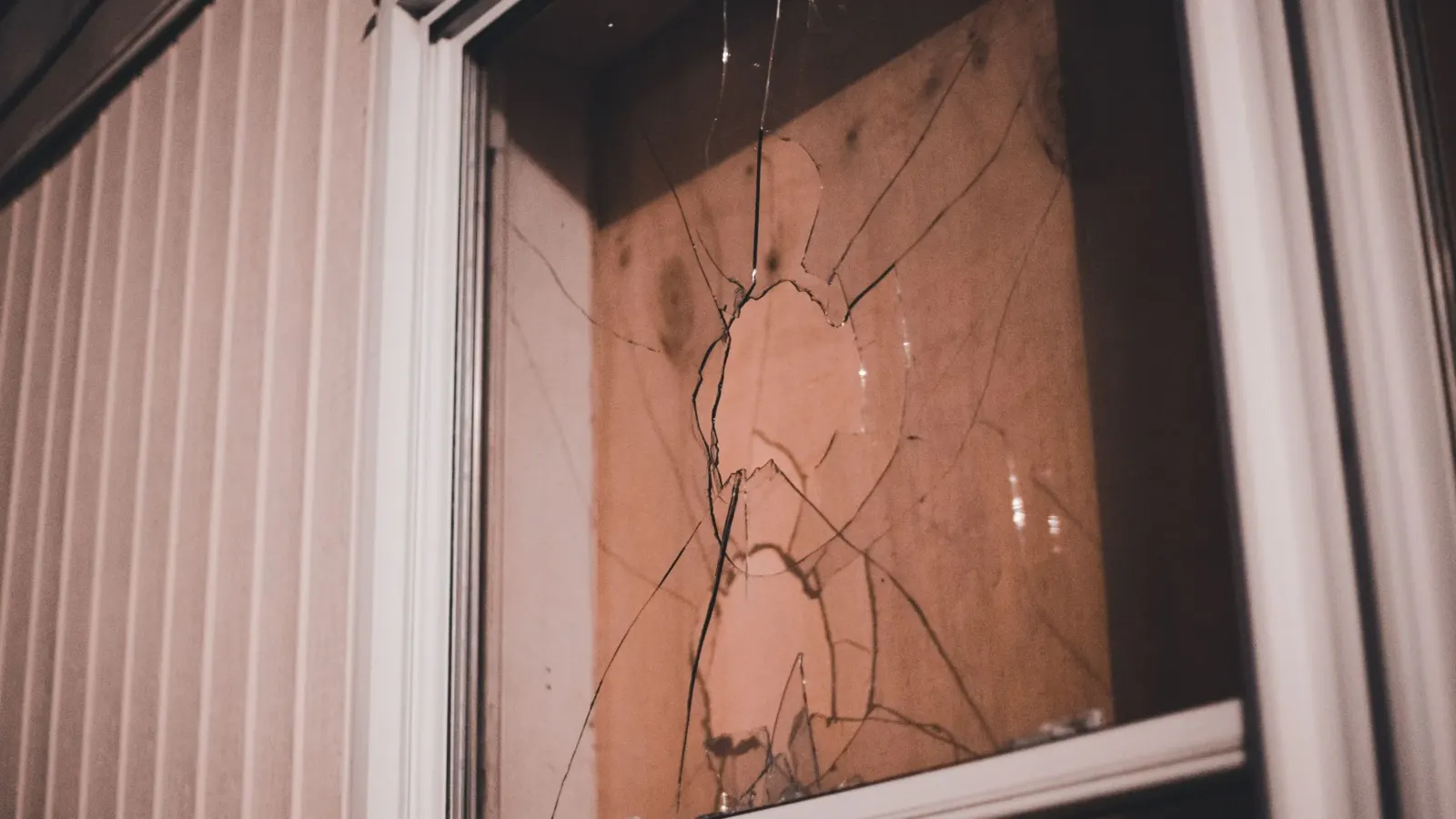
Thermal stress is tension in glass when the centre is warm and the edges are cold. Glass expands when it heats up. The centre of a pane in the sun warms more than the edges hidden in the frame.
The warm centre expands and the cold edges hold it back. This pulls on the edges. When the pull is stronger than the glass edge, the glass cracks. This is also called thermal shock.
The strength of glass depends mainly on its edge. According to 3M, a damaged edge can lose up to half its strength. The riskiest days are usually in spring and autumn. The low sun heats the glass and the nights are cold (Pilkington).
A film that absorbs some solar energy raises the glass temperature. Interior film passes the absorbed heat straight to the glass it sits on. So with insulating glass, it is not enough to ask how well the film cools the room. It also matters how much it heats the glass.
Thermal crack or impact?
- A thermal crack starts at the edge of the glass, according to 3M at least 5 cm from a corner. For the first 1 to 2.5 cm it runs at a right angle to the edge. It is usually a single crack that may then curve and branch.
- An impact crack starts at the point of impact, anywhere on the surface. It often looks like a star.
- The edge is often hidden in the frame. So the cause cannot always be confirmed without checking it (Saint-Gobain).
Has glass with film cracked? Don’t replace it blindly. Send a photo of the crack and where it starts at the frame to m2s@m2s.sk. It helps us find the cause.
Risk factors
- Pane size – the 3M glass checklist requires an assessment for single glazing over 9.3 m². For double glazing, over 3.7 m².
- Glass thickness and tint – we also assess clear glass thicker than 9.5 mm. And tinted glass thicker than 6 mm. Such glass absorbs more heat.
- Triple glazing – according to 3M, interior film on triple glazing must always be assessed.
- Reflective and Low-E glass – 3M lists reflective glass separately in its checklist. With Low-E glass we assess the type and position of the metal coating.
- Partial shading – roof overhangs, balconies, columns or a neighbouring building. They shade only part of the glass.
- Blinds and curtains close to the glass – heat builds up between them and the glass.
- Heating or air conditioning aimed at the glass. Stickers and lettering on the glass are also a risk.
- Damaged edges and hardened glazing compound – they weaken the glass even without film.
How much heat difference glass takes
Each glass type tolerates a different temperature gap between centre and edge. As a rough guide:
Ordinary annealed (float) glass tolerates about 37 °C. Laminated safety glass (two panes bonded with a film) tolerates 30 to 35 °C. Toughened glass (heat-strengthened) tolerates 150 °C or more.
So toughened glass resists thermal stress far better. Float and laminated glass are more sensitive.
These values are indicative. Real resistance depends on edge quality, pane size and how the glass sits in the frame. We recognise toughened glass by the permanent mark in a corner of the pane.
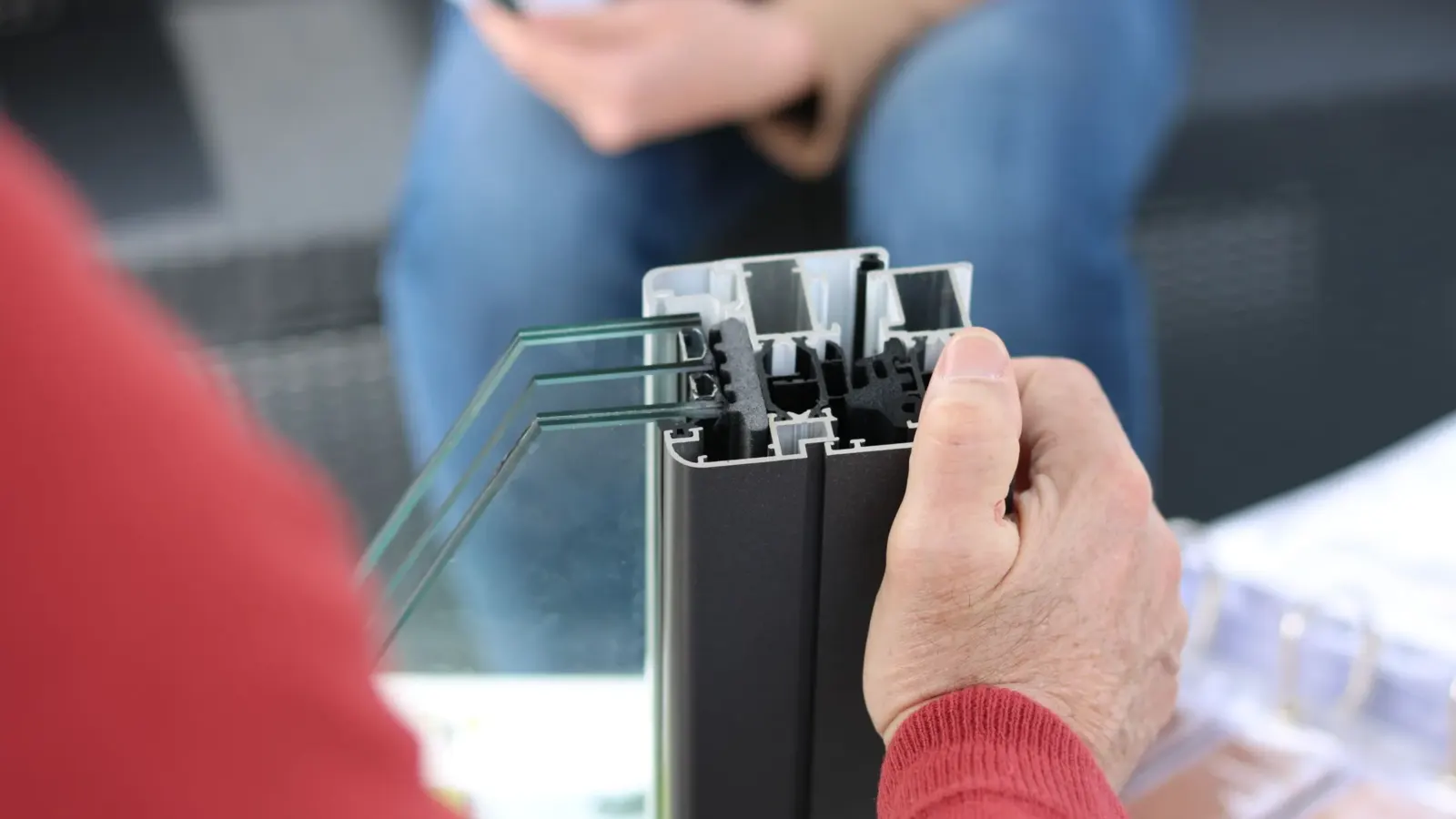
Double, triple and Low-E: in or out
On standard clear double glazing of moderate size, a lighter interior film is usually fine. Such a film absorbs less heat. An example is 3M Prestige 70.
We assess darker and reflective interior films on insulating glass more strictly. 3M, for example, requires an assessment for Prestige 40 on double glazing when blinds or curtains are present.
For triple glazing, large panes, Low-E and tinted glass, we most often choose exterior film. It absorbs heat outside, where air and wind carry it away. The inner panes heat up less.
Exterior film also works better. According to the manufacturer, 3M Prestige 70 Exterior rejects 61 % of solar energy on double glazing. The interior Prestige 70 on the same glass rejects 42 %.
Low-E (low-emissivity) glass has a thin metal coating. It reflects heat back into the room. The exterior versions of 3M Prestige also suit double and triple glazing. There, interior film would raise the risk of stress.
Gas-filled units and window warranties
Modern double and triple glazing is usually filled with argon (an insulating gas) and sealed airtight. Film on the glass surface does not directly damage the gas or the seal. But interior film does raise the glass temperature.
Some window and insulating glass manufacturers deal with this in their warranty terms. They state that film added later voids the warranty on the glass unit.
Are your windows under warranty? Check the manufacturer’s terms; we are happy to help. Exterior film heats the insulating glass less. So it is often the safer choice for newer windows.
To be honest: 3M’s warranty for thermal stress cracks applies only in the continental USA. That is what the 3M glass checklist says. In Slovakia we therefore rely on prevention. That means choosing the right film and assessing the glass before installation.

How we assess the glass
- Marking on the spacer bar – the spacer bar is the strip between the panes of an insulating unit. It often shows the build-up (glass and gap thicknesses, gas) and the manufacturer.
- Toughened glass stamp – toughened glass is usually permanently marked in a corner of the pane.
- Glass thickness and Low-E coating – we check them with a measuring device right on the window.
- Window direction and shading – which way the window faces and whether partial shade falls on it. Also what blinds or curtains you have.
- Pane size and edge condition – we compare the area with the 3M limits. We check for damage and glazing compound.
- Heating under the window – radiators and convectors that warm the glass.
Not sure what glass you have? Send a photo of the spacer bar and a corner of the glass to m2s@m2s.sk or via the form. That is often enough for a first assessment.
The full selection process is in our guide how to choose window film.
Glass type → risk → recommendation
| Glass type | Thermal stress risk with interior film | What we recommend |
|---|---|---|
| Single clear glass up to 9.5 mm | Low at usual sizes | Most interior films. Assessment above 9.3 m². |
| Toughened (tempered) glass | Very low | Interior or exterior film |
| Laminated glass | Higher. Tolerates a smaller temperature gap than float glass. | A lighter, less absorbing film, or exterior film. |
| Standard clear double glazing | Low to medium, by film and size. | A lighter interior film (e.g. 3M Prestige 70). Assessment above 3.7 m². |
| Double glazing with Low-E coating | Medium | Often exterior film (3M Prestige Exterior). |
| Triple glazing | High | Exterior film or a thorough assessment |
| Tinted or reflective glass | High | Assessment; often exterior film or none |
| Large panes, sliding walls, shopfronts | High | Assessment against the 3M limits. Often exterior film. |
| Wired, patterned or damaged glass | High, or cannot be reliably assessed. | We generally do not recommend film |
This is an indicative assessment. Limits follow the 3M Glass Checklist. Tolerated temperature differences are approx.: float glass 37 °C, laminated 30–35 °C, toughened 150 °C or more. We give the final recommendation after the site visit.
Preparing for the installation
Film is applied wet, so the fitter needs to reach the glass from the front and the sides with a squeegee, knife and sprayer.
Caring for window film
Do not clean the film for the first 30 days. A light haze and small water bubbles are normal. They disappear on their own as the film dries. In winter this takes longer.
Do
- Plenty of water with a drop of mild detergent (no ammonia)
- Soft microfibre cloth
- Rubber squeegee for the remaining water
- Clean exterior film just as gently as interior film
Don’t
- Razor blades, scrapers and rough sponges
- Cleaners with ammonia or grit
- Stickers, tape and suction cups on the film
- A pressure washer close to the edges of exterior film
Tip from practice: When you clean the frames, take care of the film edges. Do not lift them with a fingernail or cloth.
Full film care guideUpdated: November 2026
Why choose us to fit your film
We are a certified 3M Endorsed Installer. Our fitters were trained and tested by 3M itself. We have been fitting window and car films for 25 years. How long a film lasts depends on how well it is fitted.
We have even worked inside nuclear power plants
We fitted film at the Jaslovské Bohunice and Mochovce nuclear power plants. With security clearance, work permits and the strictest health and safety rules. We bring the same discipline to your flat or office.
Open shopping centres and work from platforms
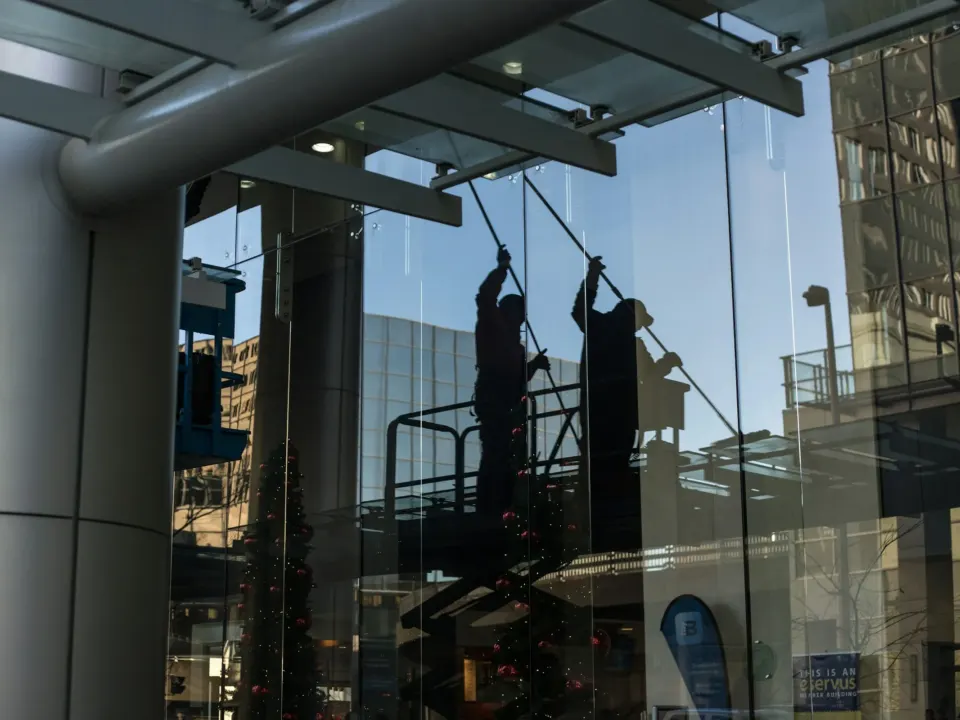
Aupark, Eurovea and Polus did not close for us. We worked section by section and before opening. The work area was fenced off. We reached atriums and skylights from platforms. All our installers are certified for work at height and for operating aerial work platforms and walkways.
Only premium materials, data shown openly
We use only premium films from 3M, Avery Dennison, ORAFOL and Solar Screen. They last longer, keep their colour and carry a manufacturer warranty. For every film you get the data sheet and certificates. The values in our quote are the manufacturer’s figures to recognised standards. Not sales promises.
We tell you when film isn’t the answer
Sometimes film will not solve the problem. Or the glass could crack from uneven heat (thermal stress). Then we tell you plainly and suggest what to do instead.
How it works
From your first message to the finished job usually takes a few days. For buildings, we plan the work so it does not disrupt your operations.
Enquiry or photo
Fill in the online form and see an estimated price at the end. Or send a photo to m2s@m2s.sk. Rough sizes are enough.
Free site visit
For buildings, we visit, measure the windows and check the glass. Then we recommend a suitable film.
Your quote
We prepare it as soon as possible. It has a clear price, the exact material, a date and the warranty terms.
Installation and warranty
Our team of two installers fits the film. You get the data sheet, the manufacturer’s warranty terms and an invoice. For cars, also a certificate of installation.
Frequently asked questions
Didn’t find your answer? E-mail us or send a free quote request – advice costs nothing.
Send us an e-mailCan I put film on double glazing?
Yes, on most double glazing. On smaller clear units a lighter interior film is often enough. On large panes and Low-E glass we choose exterior film. The glass assessment decides.
Can film be applied to triple glazing?
Yes, most often on the outside. According to 3M, interior film on triple glazing must always be assessed. The inner pane can overheat.
Will my glass crack after film is applied?
With the right film and an assessed glass, the risk is low. Cracks happen with the wrong mix. For example, a dark interior film on a large, partly shaded insulating unit. That is why we always assess the glass before quoting.
How can I tell that glass cracked from thermal stress?
A thermal crack starts at the edge of the glass, usually at least 5 cm from a corner. At first it runs at a right angle to the edge. An impact crack starts at the point of impact.
Is film suitable for Low-E glass?
Yes, but we choose it more carefully. On insulating glass with a Low-E coating we most often recommend exterior films. They heat the glass less.
When is thermal shock most likely?
Mainly in spring and autumn. The low sun heats the glass and the nights are cold. Partial shade and blinds close to the glass also raise the risk.
Will I lose my window warranty?
You might. Some window and insulating glass makers exclude the warranty when film is added later. For windows under warranty, check their terms, or choose an exterior film.
How do I find out what glass I have?
Look at the spacer bar between the panes. The glass build-up is often printed on it. Send a photo to m2s@m2s.sk and we will check the rest on the site visit.
Can I use blinds after the film is applied?
Yes. But with insulating glass, don’t leave interior blinds or curtains closed tight against the glass all day. Heat would build up between them.
Is exterior film safer for the glass?
Yes. It absorbs heat outside and heats the inner panes less. But it does not last as long as interior film. See the comparison on interior vs. exterior film.
What do I need to prepare before the film is applied?
Clear access to the windows: leave roughly 1 metre of free space in front of and beside every window. Move wardrobes, beds, desks and plants away beforehand, clear the window sills, pull curtains aside and raise interior blinds. If something heavy cannot be moved, tell us in advance and we will plan around it.
Related services
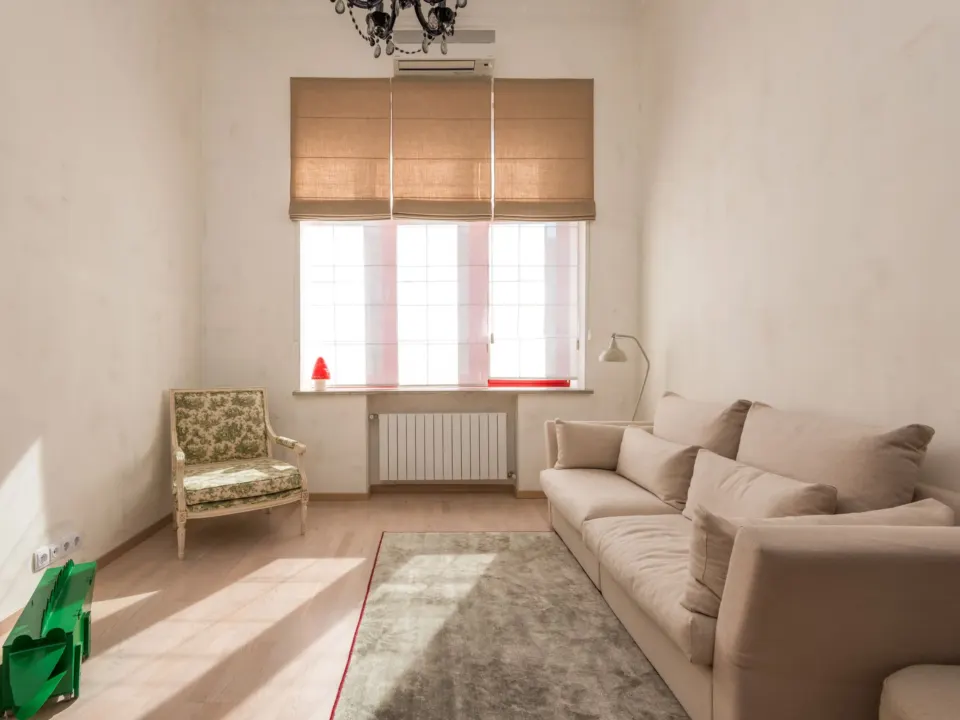

Send us a photo of your window or car. We’ll prepare a quote as soon as possible.
A few details and a phone photo are enough. We’ll e-mail you a quote as soon as possible.